


Our Writer at Large learns about the reality of life for disabled people in 2025. WARNING: DISTURBING CONTENT
“WHAT we’re about to tell you is so bloody bleak, but we make no apology,” Tressa Burke says, as the heads of Scotland’s three leading disability charities gather to lay out just how dark and frightening life has become for the people they represent.
Burke is chief executive of Glasgow Disability Alliance, which represents 6,000 people. Heather Fisken is Inclusion Scotland’s CEO, and Lyn Pornaro leads Disability Equality Scotland. All three women are disabled, and all three are furious.
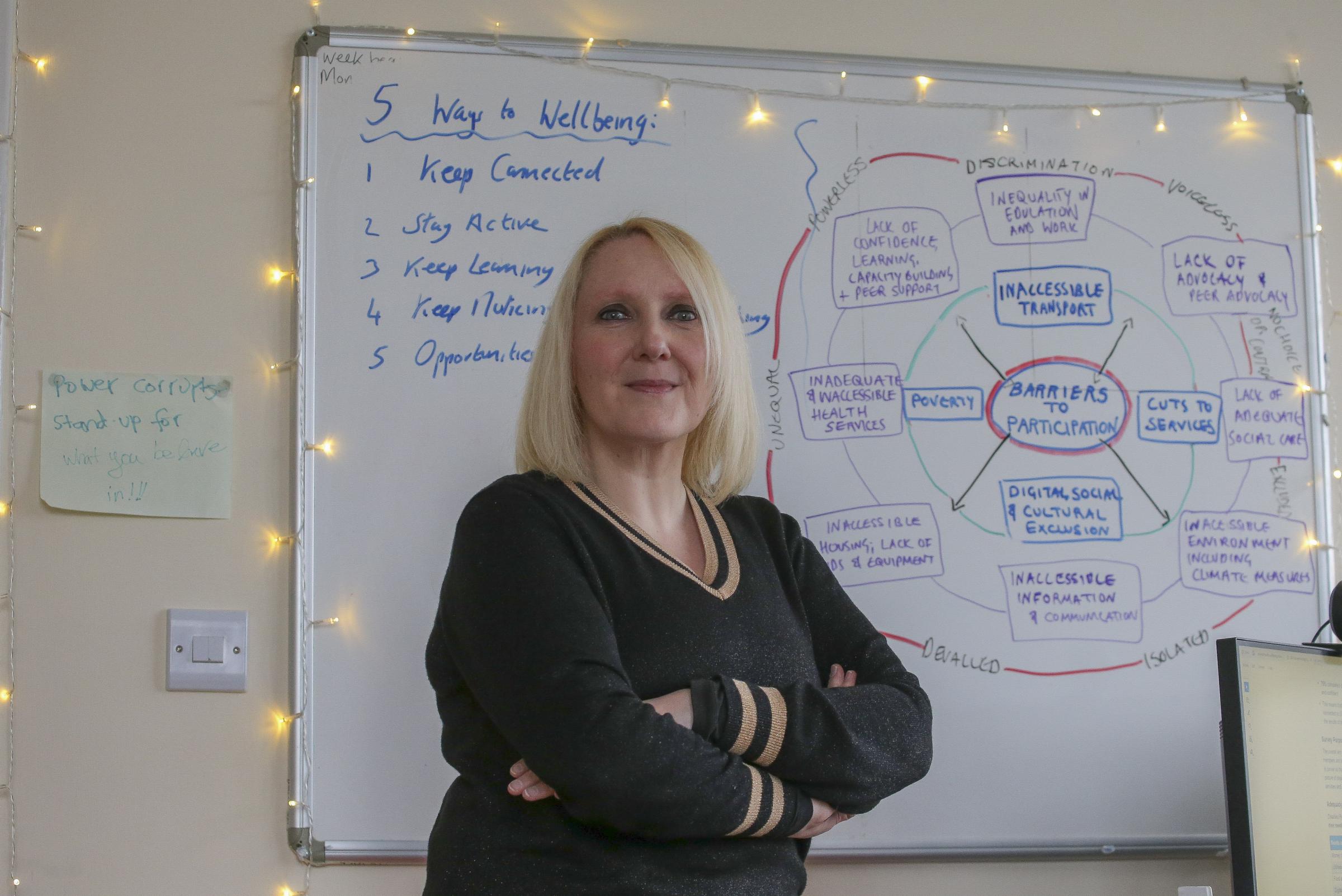
Tressa Burke, chief executive officer at Glasgow Disability Alliance. Picture Gordon Terris
Life for Scotland’s disabled people is now intolerable, they say. The Edinburgh and London governments have abandoned them, state services like the NHS and care system fail them and gaslight them, society wilfully ignores them, and discrimination and hate crime are rising at a rate that’s terrifying disabled people. “We simply want to live decent lives,” Burke says, “but most of us are barely existing.”
To illustrate her point, Burke, who has multiple sclerosis, tells the story of Paula. “She died last year. She was a wonderful person.”
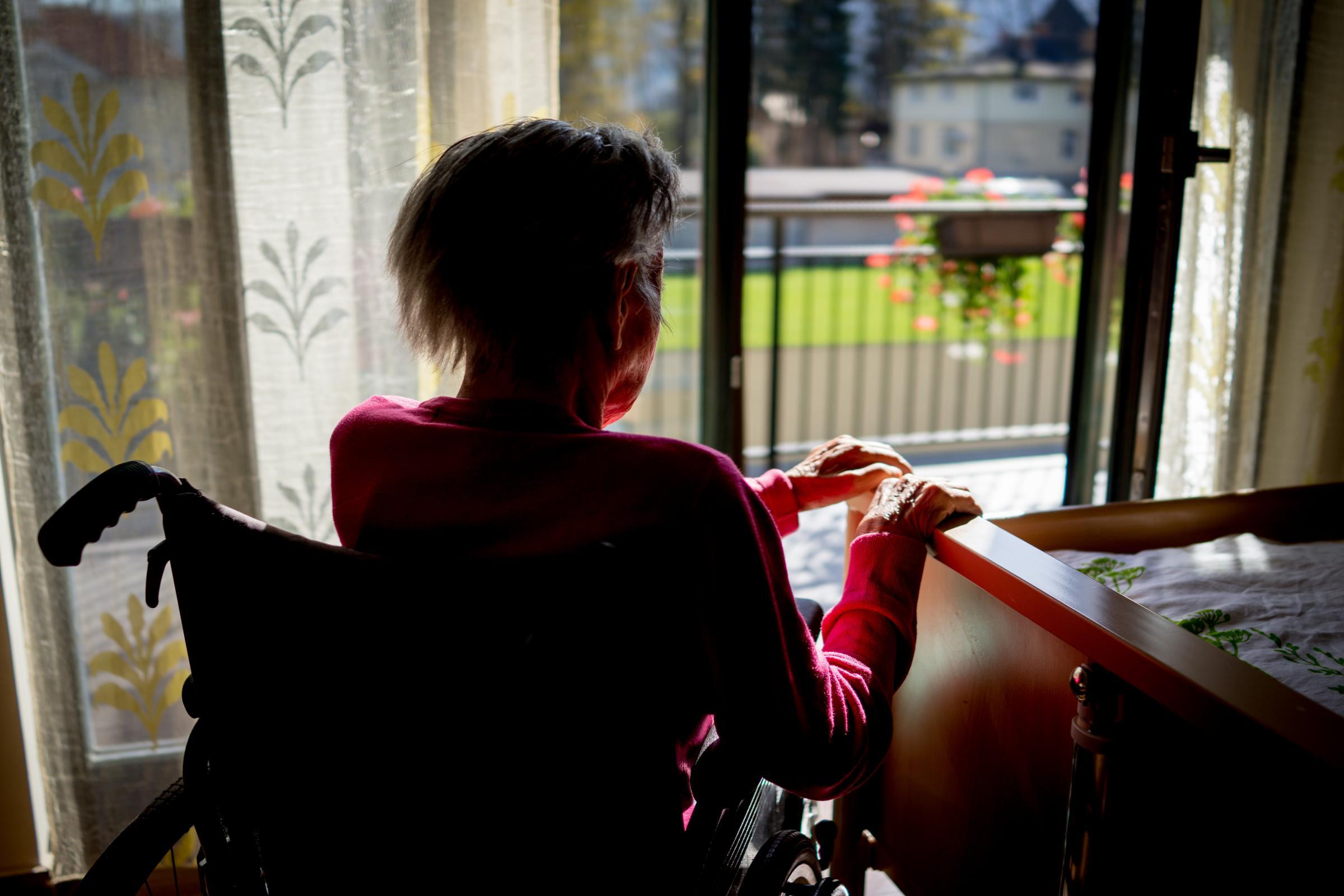
Paula documented her life as a disabled woman in a series of stark photographs before her death. Each picture showed the sun moving across her room, as that’s all she could see when she was confined to her bed.
“The support just wasn’t there for her to live a full life,” Burke explains. “She had four visits from carers a day for around just 10 minutes each.
“Ultimately, she died from a rare form of female cancer. She couldn’t get a smear test as her GP didn’t have a hoist. If you can’t get access to a hoist, you can’t get a smear test. She was a beautiful, vibrant woman. Now she’s dead. She had so much to give but she just didn’t have the right care. Hers is a typical story.”
Heather Fisken, who is deaf, tells the story of a disabled academic. During Covid, his chairlift broke leaving him stuck upstairs for 18 months until it was fixed. His toilet was downstairs.
“This is a really intelligent person,” Fisken says. “He understands the system, he knows who to write to, he can advocate for himself. Many aren’t in that position.”
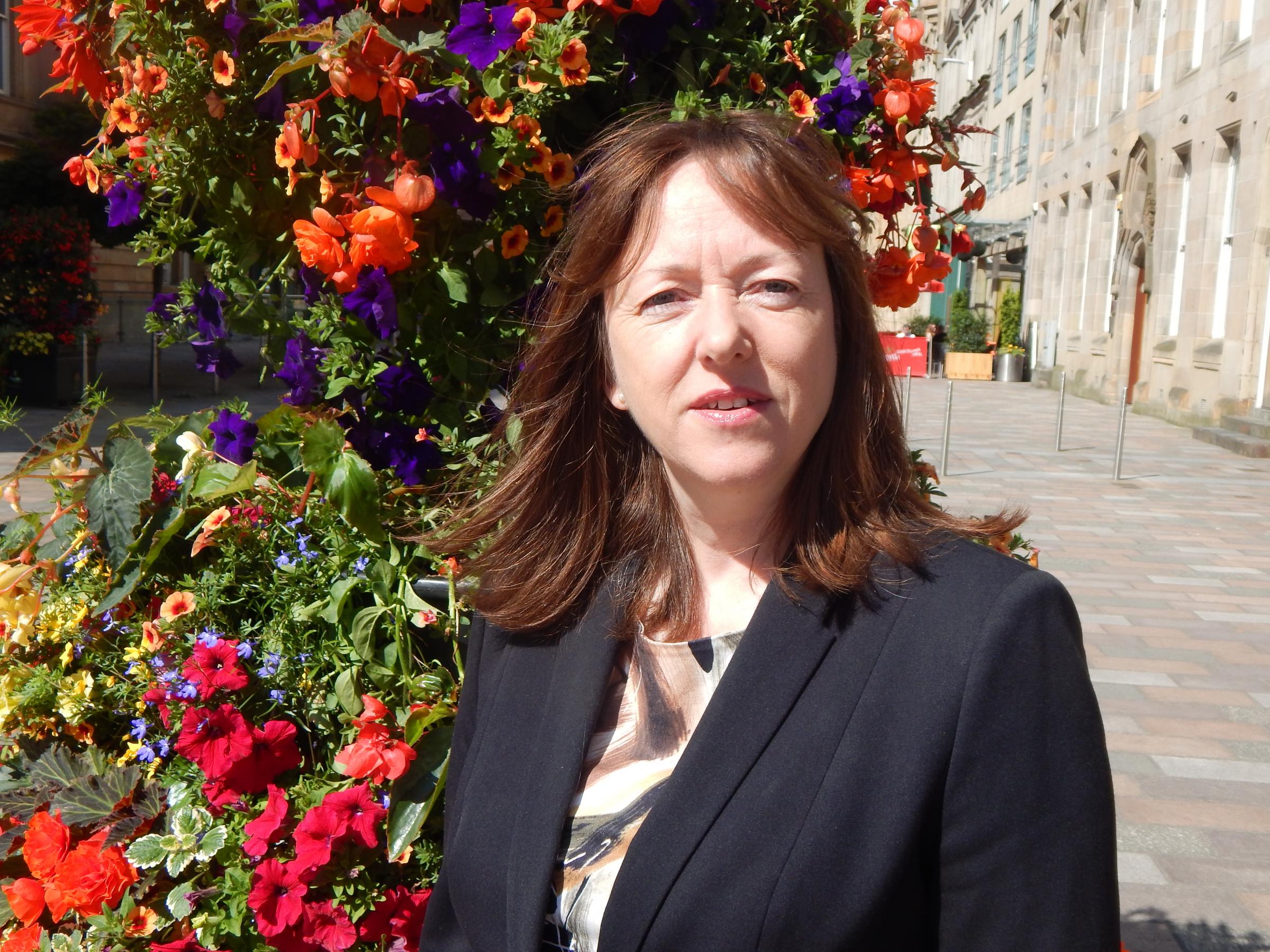
Heather Fisken, Ilis Scotland
Lyn Pornaro recounts the experience of one young woman with Down’s Syndrome. “She works and uses the train. A gang came up to her and started pushing her around, they spat on her, told her she shouldn’t be in the station without her carer, that she shouldn’t be out on her own. When she went to train staff, their attitude was ‘what do you want us to do?’. If that had been a person of colour, that wouldn’t have been said.”
Pornaro, who has severe respiratory disabilities, tells how a photographer who uses a wheelchair experienced a similar attack on his way by bus to take pictures at a football match. A gang started to harass him. “They were very vocal, very abusive. The driver wouldn’t do anything, the people around him wouldn’t say or do anything.
“He got off the bus and they followed him. He feared for his life. Thankfully, a member of the public saw this group around him and intervened. There are many stories like this. People have killed themselves because of the drip, drip, drip of harassment.”
Hate
Hate crime online is relentless. “People are told they shouldn’t be alive,” says Pornaro, “that they should be locked away, they’re called terrible names. People are told they shouldn’t go to university because ‘what’s somebody like you ever doing to be able to do, you’re taking money away from the rest of us, you get support and my child doesn’t’. It’s absolutely horrendous.
“People say they want to find us and kill us, stab us, attack us. We’re frightened. It gets to the point where disabled people are too scared to even talk about what’s going on.”
Some disabled people even fear their carers. One disabled person was deemed by their carer to have spoken out of turn while she was been moved from her bed to a chair in a hoist. “The assistant took the huff and walked out, leaving her hanging in the hoist for 15 minutes. When she came back, she said ‘you do as I tell you or you’ll be left there’.”
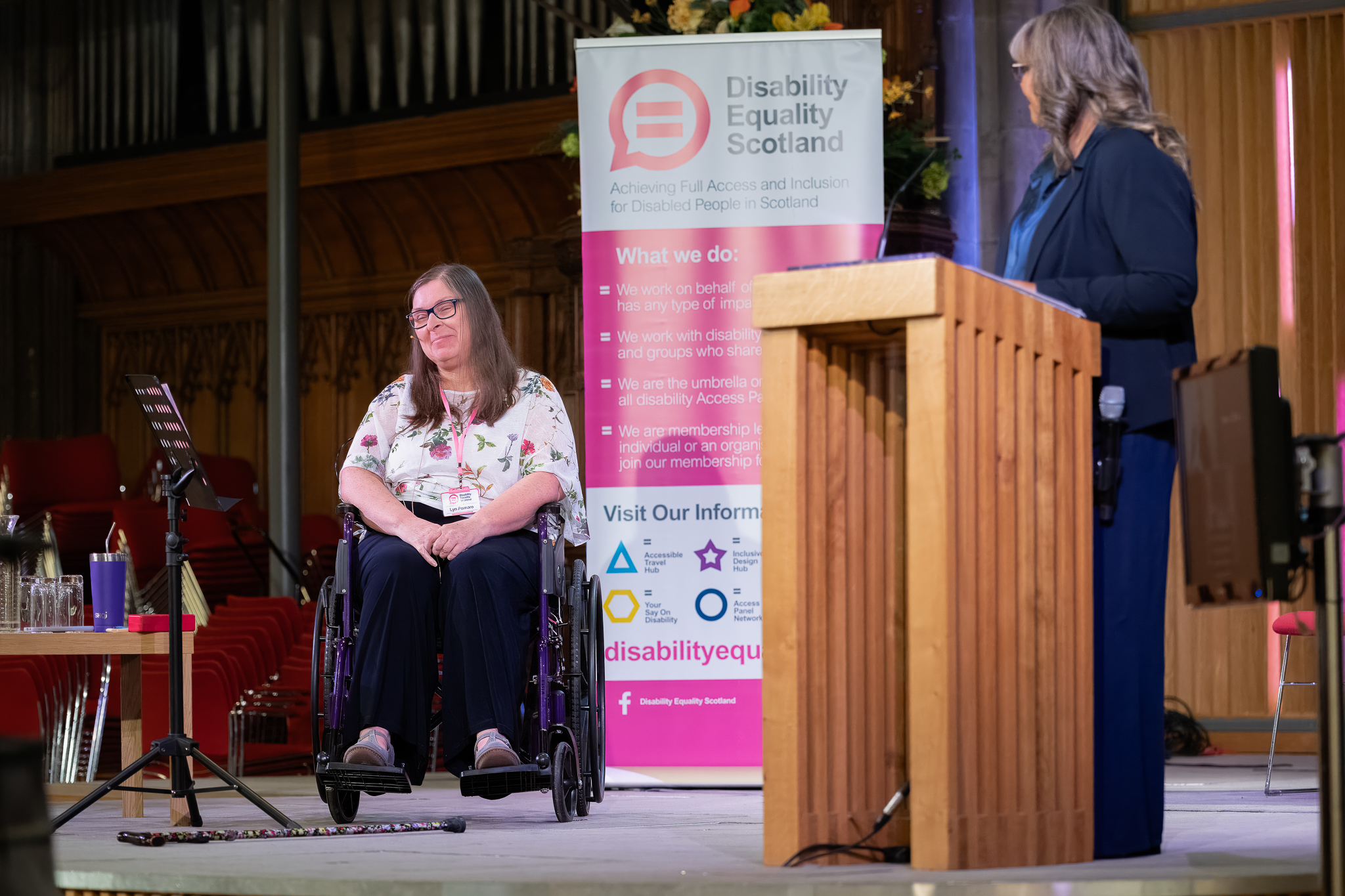
Lyn Pornaro
Pornaro adds: “So what option do you have? You’re left thinking, if I make a complaint that will go against me or I’ll get even more disrespect and discrimination. Or my carer will walk out on me and and I’ll be left alone. You’ve got other people with power all around you, and you’ve got none.”
Pornaro recounts another case where a disabled wheelchair user who lives on one of the Scottish islands had to fly to Aberdeen for a medical appointment. Her partner came with her to help, and her child stayed at home with friends. On the way back, baggage handlers refused to allow her wheelchair on the plane.
Her partner had to fly back to collect their child, so she was trapped in Aberdeen alone, “hoping that the next day she’d be allowed to get her wheelchair onboard another flight”.
The statistics about the lives of disabled people are just as harrowing as the personal stories. A survey by Glasgow Disability Alliance found that 97% were “concerned they had been forgotten in government priorities and plans”, 93% were “concerned about money”, and 91% felt lonely or socially isolated. Burke recounts how, in 2017, a report by the UN committee on the rights of disabled people painted a picture of what is happening in Britain as a “human catastrophe”.
Come 2024, she adds, the same UN committee said “no significant progress” had been made, as “the UK and devolved administrations have failed to take all appropriate measures to address grave and systematic violations of the human rights of persons with disabilities”.
Austerity and the cost of living crisis – say campaigners like Burke, Fisken and Pornaro – “have thrust disabled people into isolation and deep, long-term poverty”. Covid led to much higher numbers of deaths among disabled people than the rest of the population. Disabled people, Burke says, “are made to feel like a burden, that we cost too much for the state”.
The Labour government has made clear that more spending cuts are likely, and pointed to the number of disabled people claiming health-related benefits. What’s known as the Adult Disability Payment in Scotland currently stands at £72.65 weekly. The terminally ill get £108.55. There can be additional payments for mobility of £28.70 or £75.75, depending on the level of assistance needed.
SNP
THE three disability campaigners say recent tussles with the Scottish Government are indicative of the problems they face with the state. For 20 months, until October 2024, the three organisations had been working with the SNP to create a “disability equality plan” to improve the lives of disabled people.
After 20 months, however, “there was still no plan”, says Burke. All that was offered was “a draft that was simply rubbish. It was only 20 pages and most of it was about how brilliant the government was. There were lots of comments like ‘we will explore’, or ‘we will consider’. What we need is action because inequality in disabled people’s lives is endemic.
“So, in October, we walked away. We’ve never done that before. We’ve been critical friends of government. We try to challenge without coming out and openly criticising for the sake of it. We’re not like that, we want to work with them. We’re committed to making things better as we’re all disabled ourselves. So it was a big deal for us to walk away, but we had to make clear we couldn’t go on with this for the sake of our members.
“The government was betraying disabled people and we cannot betray our own members.”
Fisken adds that prior to Covid, disabled organisations were warning government of a crisis. “There can be no doubt in their minds. We know that they know.” What frustrates Fisken is the “lack of tangible action. We get reports, we get promises of conferences, but these don’t make a difference to the lives of disabled people”.
After the disability organisations “walked away” from talks, they finally saw some action, campaigners say. In December, the SNP announced it would add £2 million to an already existing commitment of £500,000 for a “disability equality action plan”.
The disabled organisations are glad some money has materialised, but it was “torture” getting to this point, and the amount is “really just a drop in the ocean” compared to what’s needed. Even an extra £50m, Burke says, wouldn’t come close to helping change the lives of disabled people.
“Disabled people are the forgotten electorate,” she adds, “a community nobody thinks about.”
While campaigners fully support government promises to tackle child poverty, they feel that’s coming at the expense of disable people. They also note that 40% of children in poverty live in a disabled household. “If you want to tackle child poverty you need to help disabled people too,” Burke adds.
Councils, the NHS, and both the housing and education system all either disregard or “gaslight” disabled people, the group says. Examples of gaslighting include disabled women who cannot put on their own underwear being told they’re ineligible for support with dressing as they’ve managed put on a skirt on their own.
The policy of inclusion for disabled children in schools is also a form of gaslighting as there simply aren’t enough staff trained to help them. “They’d be better in specialist units as at least they’d get support there.” By 2030, there will be only 50 teachers for deaf children in Scotland.
Struggle
“IT’S crazy. Dignity is constantly compromised,” Burke adds. One carer told a disabled person they could only watch them in the shower, not help them if they fell. The care provided to disabled people is regularly cut as “eligibility criteria” changes. “This leaves disabled people doubting their own struggles. They question their sanity at times. Our members are made to feel bad as they’re told that their package being cut will help others. It’s psychological manipulation. The actual problem is that there’s simply not enough investment in social care.”
The state, Burke says, tries to “justify the status quo rather than deliver good services which meet needs”. The state in all its forms, from central government to care providers, “underestimates how bad things are for disabled people. Most people don’t understand until it touches them”.
It’s indicative of the place disabled people hold in society that moves to enshrine disabled rights in legislation have been delayed by the SNP, along with a planned National Care Service, the campaigners explain. “Our rights are constantly rolled back, and almost never considered,” Pornaro says.
Burke adds: “There’s also a wilful ignoring of facts. Disabled people are dying in droves because of health inequalities, and through suicide as they’re so unhappy. I can’t tell you how many funerals I attend.”
Fisken says: “When we speak to government, we’re basing what we say on lived experience. We don’t just make this up. We’ve brokered opportunities for leaders, including First Ministers, to come and meet with disabled people, so they must have heard the message.”
There are serious barriers for disabled people when it comes to employment. Many young disabled people are unable to gain work experience so can’t get that vital first job. The jobs that are available go to the “lowest hanging fruit” – in other words, those “without more serious impairment or conditions”. Disabled candidates often apply for dozens of jobs before simply giving up due to overt discrimination.
Those who can’t work due to severe conditions are made to feel like “scroungers”, primarily through UK Government rhetoric. Getting benefits is a humiliating process where the applicant must repeatedly prove their disability.
Some are asked questions intended to catch them out. For example, if an applicant says they have a dog, that can be seen as proof that they can walk, as it’s presumed they take their pet out for exercise. Saying you have a phone can be seen as proof that you can use your hands. “It’s a disgrace,” Burke adds.
Scotland, however, does have a “less draconian system” than England.
Even if they can work or do pass the benefits application process, disabled people often face stark poverty due to the additional costs they incur. Charging an electric wheelchair can raise energy costs by 25%. “Some people might be doubly incontinent,” says Fisken, “so there’s much more washing. If they’re being cared for by relatives, then household income will fall as the carer can’t work.”
Nightmare
TRAVELLING becomes nightmarish – many buildings simply aren’t accessible. “You can say ‘I’ll use the Equality Act and make a discrimination case’, but which one of the many hundreds of incidents of discrimination in your everyday life do you make a case out of? And is the justice system accessible and affordable? No it’s not. People are treated in very undignified ways.”
Pornaro says many disabled people “feel like second-class citizens. We don’t want to be the number one priority, we just want to be equal. I’ve heard people in despair saying ‘I feel like I’m not a human being any more’ when they get their support cut, or social care doesn’t turn up, or they’re told they aren’t entitled to care”.
She adds: “They just want to live a life, not necessarily a fulfilling, exciting life, not to travel the world, just a life, and very often that doesn’t happen. You’ve got others in control of your own life all around you, and you’re often scared to complain in case you make it worse and get discriminated against more, or get more services and support removed from you.”
The three women all have personal experiences which underline just how thoughtlessly disabled people are treated. Fisken regularly attends audiology clinics where staff verbally call deaf patients when it’s their turn to see the doctor. Pornaro struggles to walk short distances due to her lung condition. She was given a manual wheelchair but refused an electric one as she has “the use of my arms”. However, manually using the wheelchair is impossible due to her breathing problems. Life for disabled people is often “Kafkaesque”, they say.
Pornaro once couldn’t attend a Scottish Government meeting as getting there was too difficult. When she explained, officials told her 2we didn’t think a CEO would be disabled”. Doctors regularly tell disabled patients that their pain is “all in our minds”. It’s more “gaslighting”. Family carers are also forgotten, and often reach “breaking point” as they too are isolated.
All three women say that they’ve spent their lives fighting for their rights and have learned the hard way how to take on the system, but many disabled people aren’t prepared – especially those who become disabled due to illness or accident and were “previously non-disabled”.
Burke, a social worker by profession, has had MS since her early 20s but in recent years the condition has “deteriorated”. She recently started walking with a stick and hates the “sense of powerlessness that comes with relying on people. We talk sometimes about the ‘kindness of strangers’. I’d love to say that the majority of people are good and kind, and maybe that’s true, but most people are also under pressure with work and money and they don’t always behave well”.
Going through state assessments for support is “pretty barbaric, the assumption is that you’re lying. There are so many barriers in the lives of disabled people, it affects your confidence, your ability to use your voice to defend yourself. I’ve had a couple of really hairy experiences with neurologists, though I want to caveat that by saying I’ve had great experiences as well”.
Anger
ONE specialist shouted at her, demanding to know “how many times I wet myself when I was describing very common bladder problems associated with MS, which I’m on medication for”. She complained and received a letter from him, saying “your consultant was off that day, which is why I was seeing you. And that was it. End of. Things like that just make you feel smaller and smaller. You can’t believe it’s happening. You kind of almost dissociate sometimes”.
Her anger bubbles over. When Burke tells people she doesn’t like using her stick, they think it’s “due to vanity, but it’s not. It’s because I don’t want this f*****g condition that makes people treat you differently. All you want is some dignity. And this is my experience as a professional, educated woman who knows how to fight her corner”.
She adds: “So imagine what it’s like if you’ve no social care, no education or employment, no help in the house, you’re socially isolated and lonely, and you can’t access services. But this isn’t about me. I’m just giving you the individual level. My organisation has 6,000 members and they’re all having the same f*****g experience.”
Some public officials behave with “hostility” to disabled organisations. “We face increased aggression from agencies,” Burke adds. “There’s real resistance to what we’re saying – it’s not sexy or easy to hear. At the level of the local authority and health and social care partnerships, there can be hostility.”
She said “eye-rolling” was common when campaigners raised concerns with officials. According to Burke, when the Covid pandemic began, 1,884 social care packages were cut across Glasgow while local officials “want to self-congratulate” and “deny the reality of what’s happening to disabled people”.
Loneliness is endemic. Most disabled people live alone. “It’s so sad,” Burke says. Some of those without sufficient care “need support to get out of bed, get washed and dressed, feed themselves, even just sit in a chair in front of the telly let alone get outside”.
She adds: “Since austerity kicked in, government has devalued and deprioritised disabled people’s lives. Not that we’ve ever been a priority. Yet in some areas of Glasgow almost 30% of the population are disabled. The numbers are staggering, the health inequalities horrific.”
The campaigners are stunned that such a fuss was made about recent cuts to Creative Scotland, while barely a word is said about the state of funding for disabled people. “We’ve nothing against the arts,” says Burke, “but when there are complaints, they get money like that.” She clicks her fingers. “Remember, anyone can become disabled in a moment.” All it takes, the group notes, is a car accident, and your life changes forever.
“We’d love a First Minister to say ‘we’re going to prioritise disabled people simply because disabled people are worth us investing in’.” The campaigners know they’re taking a risk speaking out, as much of their funding comes from government. “But we need to speak truth to power,” they say. “Nobody is going to shut us up, no matter how much they give us.”
Burke says the discrimination and ill-treatment of disabled people has turned her from a supporter of assisted dying legislation to an opponent. Disabled campaigners have been questioned by Scottish parliamentarians about whether their opposition to the proposed laws is due to religion. “It’s nothing to do with religion. We’ve been lobbied by our members who are terrified after what happened during Covid, when ‘Do Not Resuscitate’ notices were put on people’s files without their knowledge. It showed us how little value is placed on our lives.”
Abuse
BURKE believes there are few in government “who actually care about disabled people”. Though she makes an exception for social justice secretary Shirley-Anne Sommerville and Humza Yousaf, who she described as “respectful and humble”. Glasgow Disability Alliance, Inclusion Scotland and Disability Equality Scotland successfully lobbied for a motion to go before Parliament saying that disabled people had been “forgotten by the Scottish Government”.
When it comes to the general population, slurs are commonplace. Pornaro says that while someone who used racial, religious or gendered insults would be shunned, verbally abusing the disabled is often laughed off. “We’ve a long, long way to go before society’s attitudes change.”
Part of the problem is comedians. No longer able to trade in racial or misogynistic insults for fear of retribution, some still use the disabled as the butt of their “jokes”, the campaigners say. “There’s such polarisation: we’re either superhuman, Paralympians, or beggars, cheats and scroungers.”
Hate crime against disabled people rose by 22% in Scotland in 2023/24, leading to the highest annual number of charges – 903 – since 2010. Prosecutors say the rise “continues an almost unbroken upward trend”.
Many hate crimes see disabled people targeted in their own home. Public transport is another common location. One bus company refused to put up posters warning against hate crime targeting disabled people. Pornaro says: “They wouldn’t do that if it was about race, sexuality or age.”
Burke adds that there’s been great improvements around race and sexuality in society, “but now we need prioritised because we haven’t been paid any attention and our people are dying”.
The rise of the far right terrifies Burke. Online extremists have spoken of “exterminating” disabled people, she says. “It’s like the stuff Hitler said. I can’t quite believe sometimes that people actually believe this.” Such hate has fuelled her opposition to assisted dying legislation. She fears “legislative creep”, and a slippery slope which could see the disabled pressurised into taking their own life. “Or worse,” she adds.
She believes that the vast majority of people who back assisted dying “do so for the right reasons – like ending unnecessary suffering, bodily autonomy, and personal choice. But I also believe there are some on the extreme right who’d like to get rid of us. They see us as not economically contributing. That faction exists.
“I’m just repeating what our members say because their lives have been so devalued and their social care cut on a whim, they’ve been intimated, spat on, attacked. It’s absolutely awful.”
Pornaro adds: “It’s estimated that 97% of hate crime against disabled people isn’t even reported. We have members who literally fear state-controlled killing of disabled people.”
Dying
The state shouldn’t even consider assisted dying until the lives of disabled people are placed on an equal footing with “the lives of the non-disabled”, Burke believes. Until then, attention should be focused on better palliative care and hospices. “I’ve been driven by the experience of disabled people to take this position,” she adds.
As an example of just how cruel society can be, Burke recounts how one woman with cerebral palsy was followed off a bus and fell as she tried to get away. Her pursuer stood over her, shouting and spat on her. “We have this view of ourselves in Scotland that we’re more progressive, liberal and egalitarian. I’d love to believe that, but it’s hard. We have a UK Government telling us they can’t resource disabled people, that they’re coming for us, and the Scottish Government seems to be in full agreement.
“It’s like Lord Of The Flies – it’s survival of the fittest out there, it’s Darwinian. A dangerous individualism has crept into Scottish society that’s dog eat dog. It’s now only about whether you can contribute economically, if you can’t you’re worthless. It feels like we’re going back to the poor laws, where the disabled had to go cap in hand for charity. That’s where the word ‘handicap’ comes from. We’re othered, and pushed to the bottom, cast out.
“Disability is inevitable, but inequality, injustice and exclusion are political choices.”
Pornaro has a stark vision of the future. She predicts rising deaths among the disabled as austerity continues. “The message from both governments is ‘we’re attacking the disabled as they aren’t worth supporting, so we’ll just push them further into poverty’. One hundred years ago, disabled people would have said the future looks bleak
– well it looks even bleaker today.”
GOVERNMENT RESPONSE
EQUALITIES Minister Kaukab Stewart told The Herald on Sunday: “The Scottish Government is investing £2.5 million to deliver positive change for disabled people across Scotland through our Disability Equality Plan.
“Disabled people’s organisations have made clear where the priorities of disabled people lie and the Scottish Government is working collaboratively with DPOs about how best to utilise the funds to support their priorities.
“We have already taken significant action to address the challenges facing disabled people within the limitations of our devolved budget.
“This includes record investment in benefit expenditure, including more £314m additional investment for Adult Disability Payment this year, reopening the Independent Living Fund which will help up to 1,000 more disabled people to access the support needed to lead independent lives, and we have introduced the Child Winter Heating Payment helping households with severely disabled children manage the additional costs they face this winter.
“Statements made by the UK Chancellor about welfare reform and benefits cuts are deeply concerning.
“The Scottish Government will oppose reforms which reduce levels of financial support – which are already inadequate – to our most vulnerable. These measures should be scrapped.
“As well as the impact on individuals, I am deeply worried by comments that look to reduce spending on sickness and disability benefits by more than £8 billion and the potential impact this might have on our block grant and this government’s ability to continue to support those who need it most.”


Share