




The Walsh Sisters, The Lady, Dirty Business and Murder Case: The Hunt for Arlene Fraser's Killer
Early in her career, Marian Keyes complained about her books being given lollipop‑coloured covers and dismissed as “chick lit”.
Quite right too. Keyes’s novels are as much tragedy as sparkling comedy. She walks the trickiest of literary paths with deceptive ease, and while many have tried to follow, no one has matched her.
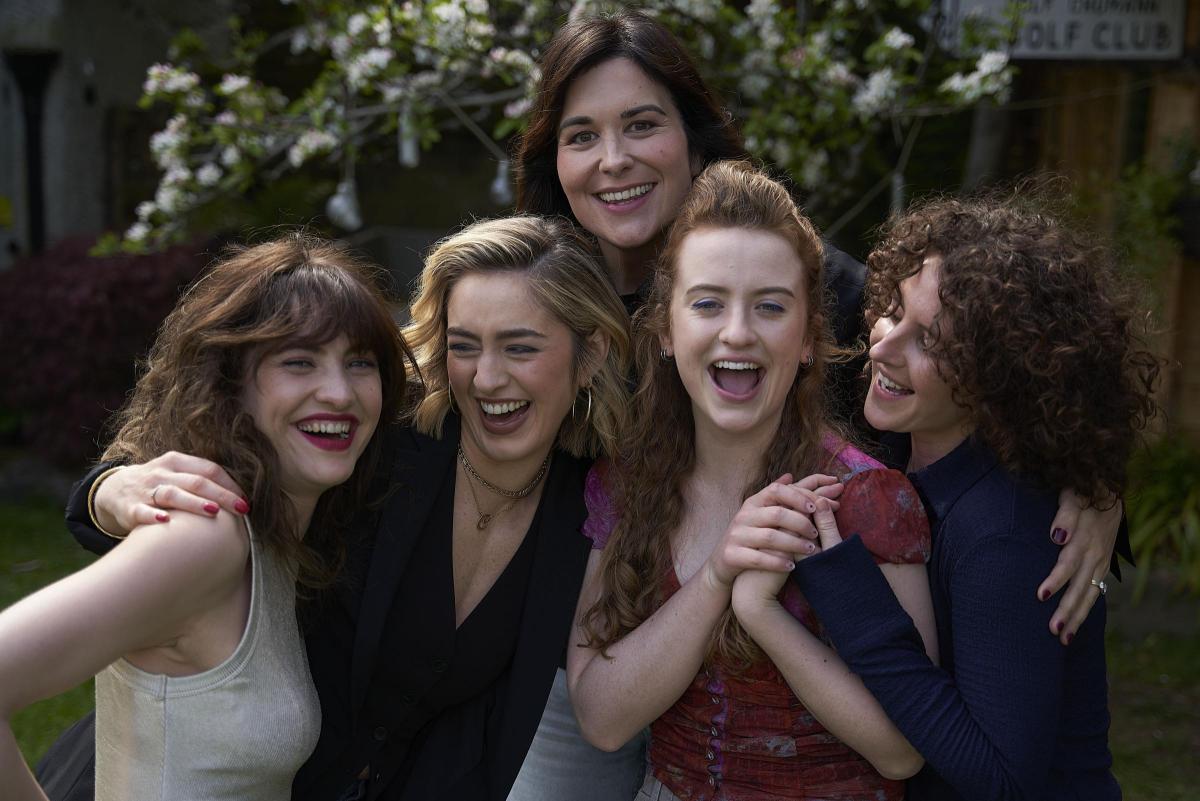
I suspect it’s largely for that reason that only one of her novels, Watermelon, has made it to television, and that was a standalone film. The Walsh Sisters (BBC1, Saturday), in contrast, is a six-part BBC-made blend of books adapted by Stefanie Preissner and Kefi Chadwick.
We meet Rachel (Caroline Menton) on a night out with her sisters in Dublin. Everyone is merry but she is smashed on booze and drugs. Each of the five Walsh sisters has her own woe, be it infertility, divorce, anxiety, or Mammy Walsh’s fashion and make-up “advice”. But the real 999 case, all agree, is Rachel. By the end of episode one, she has almost been persuaded to go to rehab.
There is much more to come, but the tone and direction are set early on. Watching The Walsh Sisters is like arriving sober at a party that’s well underway - fun at first, then wearying. It’s like the curse of the lollipop book covers, but in reverse: seriousness has been taken to mean relentlessly gloomy, lightness is out the window. Certainly, the subjects covered hardly lend themselves to humour, but The Dry manages it, as does every Keyes novel.
The Lady (STV, Sunday-Monday) was yet more royal drama in a week hardly short of the stuff. Then again, this true crime story is not strictly a royal affair. Like its subject, it attracts attention through association, in this case with the then Duchess of York, Sarah Ferguson.
Jane Andrews was Ferguson’s dresser. Years after she was let go, Andrews was convicted of the murder of her boyfriend. Partly as a result of the royal connection and the shocking nature of the crime, media interest was huge.
In this four-part “inspired by a true story” drama, Andrews is played by Mia McKenna-Bruce (Agatha Christie’s The Seven Dials Mystery). Having long dreamed of being a fashion designer in London, Jane answers an ad in The Lady and ends up ironing and altering Ferguson’s clothes. But the two click and she begins to consider the Duchess as a friend. Big mistake, as Julia Roberts says in Pretty Woman. In a nice touch, Andrews gets her own Roy Orbison shopping track.
Natalie Dormer (Game of Thrones) looks nothing like Ferguson, but she catches her gallumphing manner perfectly. When the duchess gets a new chum to play with, Andrews is out. A succession of men follows, all chosen to keep Andrews in the style she now expects, but her increasingly violent temper scares them off.
Read more
- Banjo and Ro's Grand Island Hotel review: A Hebridean makeover show with heart
- Inside The Tony Blair Story: Channel 4's fearless portrait of a political phenomenon
- How to Get to Heaven from Belfast review: As good as Derry Girls?
- The Summit review: Look who has rocked up on ITV's mountain challenge
Debbie O’Malley’s screenplay rattles along, but it still seems two episodes too long. The best bits are the scenes with Ferguson and the trial, but they bring their own problems. I don’t expect many will want Ferguson in their living rooms right now. And the trial, we are reminded, was a brutal one in which the victim’s character was dragged through the mud by Andrews. What is to be gained by repeating all that?
Performances aside, the same could be said of Andrews’ story.
Ever since a certain Mr Bates took on the Post Office, the search has been on for the next fact-based television drama that would rouse the Great British public from its slumber. Dirty Business (Channel 4, Monday-Wednesday), may be it.
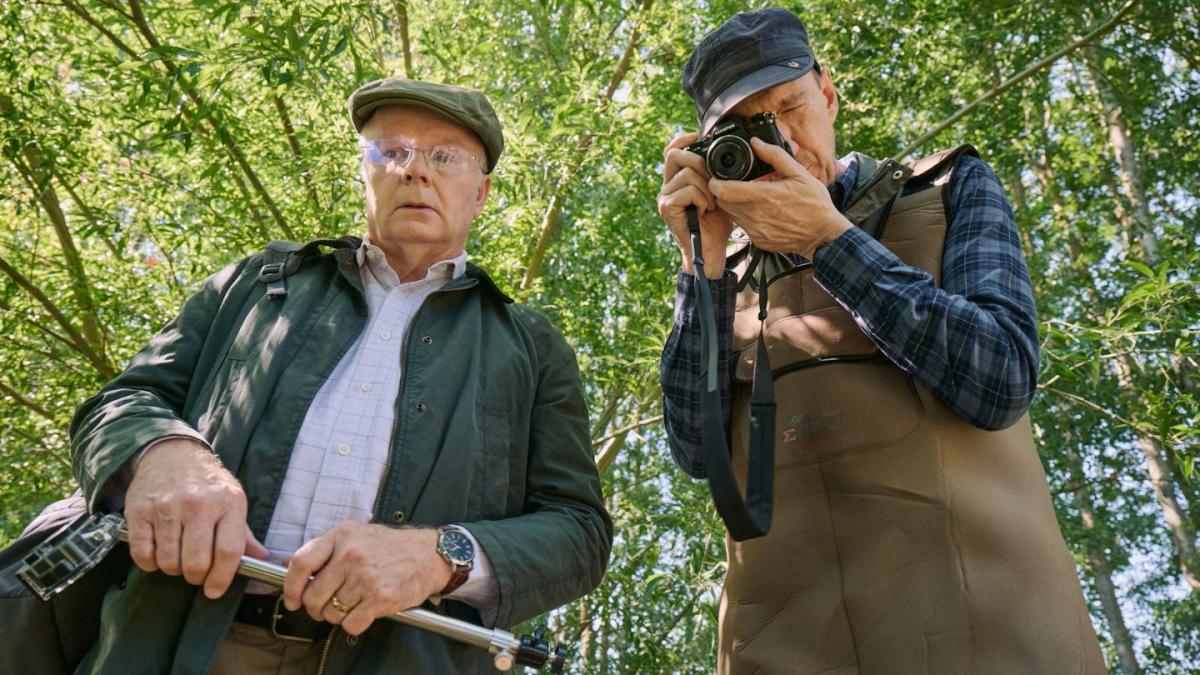
Dirty Business goes one better than Mr Bates in having two heroes at the helm. Jason Watkins and David Thewlis play Cotswold neighbours Peter Hammond and Ashley Smith. Having noticed the state of their local river, the retired copper and the mathematician delve further. So begins a descent into the Wild West world of water companies, a land where profits rule and where you can dump crap into rivers and onto beaches and keep it a secret.
It is no longer a secret when your child ends up covered in it, as happened to Mark and Julie Preen while on holiday in Devon with their two daughters. The youngest, Heather, fell ill with E. coli 0157 and died. She was eight years old.
What happened to the Preens is one of several strands that come together to make a shocking whole. I defy anyone to watch the scenes of Heather in her parents’ arms and not become enraged.
This is a tale of corporate greed and buck-passing, with the “little people” left to pay the price.
Writer-director Joseph Bullman made the drama Partygate, which skewered the Johnson administration for what went on in Downing Street during lockdown. He comes out swinging with footage of Margaret Thatcher predicting privatisation will go “very successfully indeed”, and barely pauses for breath thereafter. David Cameron is shown boasting about deregulation, Liz Truss too. There’s a shot of the Grenfell Tower ablaze in case the message is not quite clear.
As for the “bad guys” - and quite a few women - no quarter is given. Their attempts to defend the indefensible often resemble some warped version of the BBC sitcom W1A, except this is no laughing matter. Several familiar faces from satirical drama turn up among the cast. At one point, Jon Culshaw, of Dead Ringers fame, appears as an MP.
Dirty Business makes no pretence of neutrality. Given what is uncovered, it is hard not to agree wholeheartedly with the case for the prosecution. Speaking of which, it turns out that England’s Environment Agency has prosecutorial powers - just like the Post Office - but no water company executive has gone to jail for breaking the law. Funny that.

In April it will be 28 years since Arlene Fraser’s two children returned from school to an empty house in Elgin. It was the beginning of what would become a landmark case in Scottish legal history, one that has generated twists to rival the imaginings of any novelist.
Its pull endures, with at least three major documentaries already made on the subject. Murder Case: The Hunt for Arlene Fraser’s Killer BBC Scotland Tuesday, BBC2 Thursday) is the latest.
Made by Firecrest Films, the first of two hour-long parts opens with footage from the house at the time: the vacuum cleaner still plugged in, the washing on the line. There’s a close-up of the note her son Jamie left for his mum: “Where are U!” - the exclamation mark hinting at how thrown he was by this most unusual occurrence.
Nothing is presented in a sensationalist way. There is no need to over-dramatise; as the filmmakers are well aware, the plain facts are disturbing enough.
At this point, we meet Carol Gillies, Arlene’s big sister, whose tireless pursuit of justice would consume her and her family from that day on. Besides telling us about Arlene the person, Gillies lights the way through what would otherwise have been a near impenetrable blizzard of trials, appeals and procedural zig-zags. She is the viewers’ guide to what was going on and why it mattered.
Other contributors include detectives who worked on the case, journalists, as well as academics and specialists. Together, they build a portrait of Nat Fraser, Arlene’s husband and the man who would be convicted twice of murdering her.
In one chilling moment, the BBC’s Shelley Jofre revisits her interview with Fraser, at the end of which she asked him directly if he had anything to do with Arlene’s disappearance. “Nothing at all,” he says. Jofre’s conclusion is the same now as then.
There is some repetition across the two parts. Clips from a previous BBC Scotland documentary appear, as does footage from Channel 4’s The Murder Trial. This latest documentary has new interviews with Carol Gillies and former detective superintendent Alan Smith, among others.
What stands out, though, is the filmmakers’ determination to make this a story about people more than process. The film starts with Arlene, and it ends with her. But as most viewers will know, this is a story without an ending - Arlene’s body has never been found.
Carol Gillies, with other bereaved families, has been working on that too, helping to push through legislation that presses killers to disclose the whereabouts of their victims, or face the consequences at parole. “If the parole board can’t do anything to help us, then he’ll get out, and the truth will be gone forever,” she says.
Fraser is eligible for parole in October 2028.


Share