


In football, a commentator will often declare "nobody wants to see this kind of thing" as a mass brawl breaks out on the pitch, in full knowledge that everyone actually really does want to see this kind of thing - you can tell by the way the camera zooms in.
Much the same is true of electoral campaign 'dirty tricks'. We'd all like to pretend that what we want is a well-mannered, sensible discussion of variable tax rates but really we want backbiting, sniping and zingers.
It was Malcolm Offord of Reform UK who inserted the first real bit of drama into the 2026 Holyrood election campaign when he this week accused Scottish Labour's Anas Sarwar of seeking to form some kind of pact with him on the sly to drive out the SNP.
Granted it wasn't "you're no Jack Kennedy" and it wasn't Donald Trump threatening to put Hillary Clinton in jail but it was about as exciting as anything involving John Swinney is likely get.
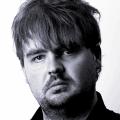
But who is this millionaire yachting enthusiast? Does he really eat a scotch pie every day? And could he one day be sitting in Bute House?
Read More:
- Here's how much Prestwick Airport has earned from US military contracts
- Political elite of SNP and Labour is to blame for Reform's rise
- The Herald and WiPA Scotland to host election hustings
Though he may have the air of an aristocratic badger, Mr Offord did not come from wealth.
Born in a tenement flat on Bank Street in Greenock, his education came at his local state primary school and then Greenock Academy.
When he graduated in law from the University of Edinburgh in 1987 he, in his own words, "took the overnight bus to London with nothing more than one suitcase, my rugby boots, a chunky overdraft and a letter asking me to report to a merchant bank called Lazard".
Mr Offord worked in the bank's corporate finance department for the next six years, specialising in mergers and acquisitions, before branching out into private equity investments.
Spending most of his non-political career in the city, he would go on to found Badenoch and Co, which in its last set of accounts boasted shareholders' funds of £1.7m.
Mr Offord returned to Scotland in 2014, settling in Edinburgh, which coincided with his first real move into politics.

The investment banker set up a group called Vote No Borders to oppose Scottish independence, which promised to "inject some positivity into the Union" and offer a politician-free space for those set against separation.
Speaking after its launch he said: "There's no politicians; there's no celebrities. It's a mechanism, on a non-party political basis, to begin to use non-political language, just to voice some of the reasons why we want to keep the union. That doesn't mean to say that the union is perfect in any way: it has to evolve."
He wasn't kidding about using non-political language. While Alex Salmond spoke of the opportunity of "a nation reborn" and Alistair Darling warned of gambling over currency, pensions and the price of oil; Mr Offord described the centuries long relationship between Scotland and the rest of the United Kingdom as "rather like a cup of hot chocolate".
As for the positivity, an advert by the campaign was pulled from Scottish cinemas at the request of Great Ormond Street hospital after it claimed those north of the border would have to join "a long list of foreigners" waiting to be seen at the London health centre.
If the political career of Mr Offord were a Hollywood film, this would perhaps be the scene where he's staring just a little too long at the One Ring, or asking suspicious questions about powers one cannot attain from a Jedi.
Hot chocolate duly preserved, he sold his house in Edinburgh's New Town for £2.9m in 2018 and moved back down south, but having dipped his toe in the political water there was no going back.
Though he failed to be approved as the Conservative candidate for Edinburgh Central at the 2021 Holyrood election, finishing second in the internal ballot of members behind eventual victor Scott Douglas, he was given a place on the regional list for Lothian.
Some party members detected a whiff of cronyism in the selection, given the fact he had no experience in elected office but plenty of experience in donating to the Conservative Party, but nonetheless he was not elected.
As it turned out the millionaire didn't actually need to be elected to find himself in a coveted position.
Later that year he was made a peer in the House of Lords by Boris Johnson and installed as Under-Secretary of State for Scotland, sailing merrily past a chagrined Andrew Bowie and John Lamont.
Mr Offord held the role under three Prime Ministers, which once upon a time would have made him some grand elder statesman but in the 2020s means he did it for about two-and-a-half years.
A resounding defeat for the Tories in the 2024 election could have meant remaining a name familiar only to those partial to a spot of wonkery but in January of 2025, at a rally in Falkirk, Mr Farage announced that the millionaire had defected and would lead Reform in Scotland.
The party leader called it a "historic act", unlike the Act of Union which is, of course, a cup of hot chocolate.
In many ways Mr Offord seems like something of an ill-fitting leader for a right-wing populist party, at least judging by his previous stated positions which in many ways would have put him on the left of the Tory party.
In a series of essays outlining why Scotland should remain in the United Kingdom, Mr Offord struck a rather different tone to both the prevailing Conservative orthodoxy and, indeed, his new party's manifesto.
Challenging what he called "old Tory dogmas", he argued that government deficits are not inherently bad, that the idea the state has no money is "a myth peddled by Margaret Thatcher", and that the UK should be taking advantage of low interest rates to increase borrowing with the aim of "eradicating poverty and protecting our environment and turbo-charging our economy and sorting out our infrastructure and fixing our education system".
Naturally all this was tied to the idea of also cutting taxes to stimulate investment, but it strikes a rather different tone to Mr Farage who has advocated for huge spending cuts to deal with the national debt.
Reform's Holyrood manifesto decries the "myth that Scotland is subjected to austerity from Westminster", despite Mr Offord stating in his essay that successive Tory chancellors had presided over "a decade of austerity".
Mr Offord has previously proposed a universal job guarantee for Scotland, backed initially by state investment in infrastructure and house building, a universal housing guarantee underpinned by 70,000 social rent properties due to the "unaffordable private sector" and an environmental guarantee which would introduce high-speed rail between Edinburgh and Glasgow and "an electric M8".
In another life his party leader would be describing him as some kind of Greenock Gorbachev for such policies.
Then there's his ideas to "turbo-charge Scotland's economy" which included, er, promoting immigration.
Wrote Mr Offord: "If we had secured our proportionate share of UK immigration in the last 30 years, our population would be one million higher. Our population is ageing and we need more taxpayers."
The phrase "turbo-charge Scotland's economy" appears in the Reform manifesto but strangely enough promoting immigration does not.
Perhaps not a natural when it comes to the politics of the populist right, then, but Mr Offord has shown James Milner levels of versatility in taking to his new position.

He repeatedly refused to disavow an advert broadcast in the Hamilton by-election which accused Scottish Labour leader Anas Sarwar of seeking to "prioritise the Pakistani community", with the spot condemned by Labour, the SNP, the Liberal Democrats and the Scottish Greens.
Mr Offord has since aped his leader by appearing in front of a 'Scotland is at breaking point' poster featuring men, presumed to be asylum seekers, on a dinghy and been forced to apologise for a homophobic joke he made in 2018.
If one were to distil his maritime policies into a snappy campaign slogan, it would probably read: 'Yes to large yachts, no to small boats'.
Polling suggests that Mr Offord is likely to become the leader of the opposition at Holyrood after the election but it's hard to quantify how much of that will actually be down to him.
Love him or loathe him, Mr Farage is clearly a political communicator of rare gift and history suggests both the rise of Reform and its potential ceiling will depend entirely on how much of the electorate falls into each camp.
The party's Scottish leader may be doing his best tribute act, with pies instead of pints, but does he have the rizz? Does he even know what rizz is?
The tides of right wing populism will almost certainly sweep him into the Scottish Parliament but perhaps the key question is - does he even really believe any of it?


Share