




New polling puts the SNP on course to remain the largest party in the Scottish Parliament following next week's election although the party is not projected to win a majority.
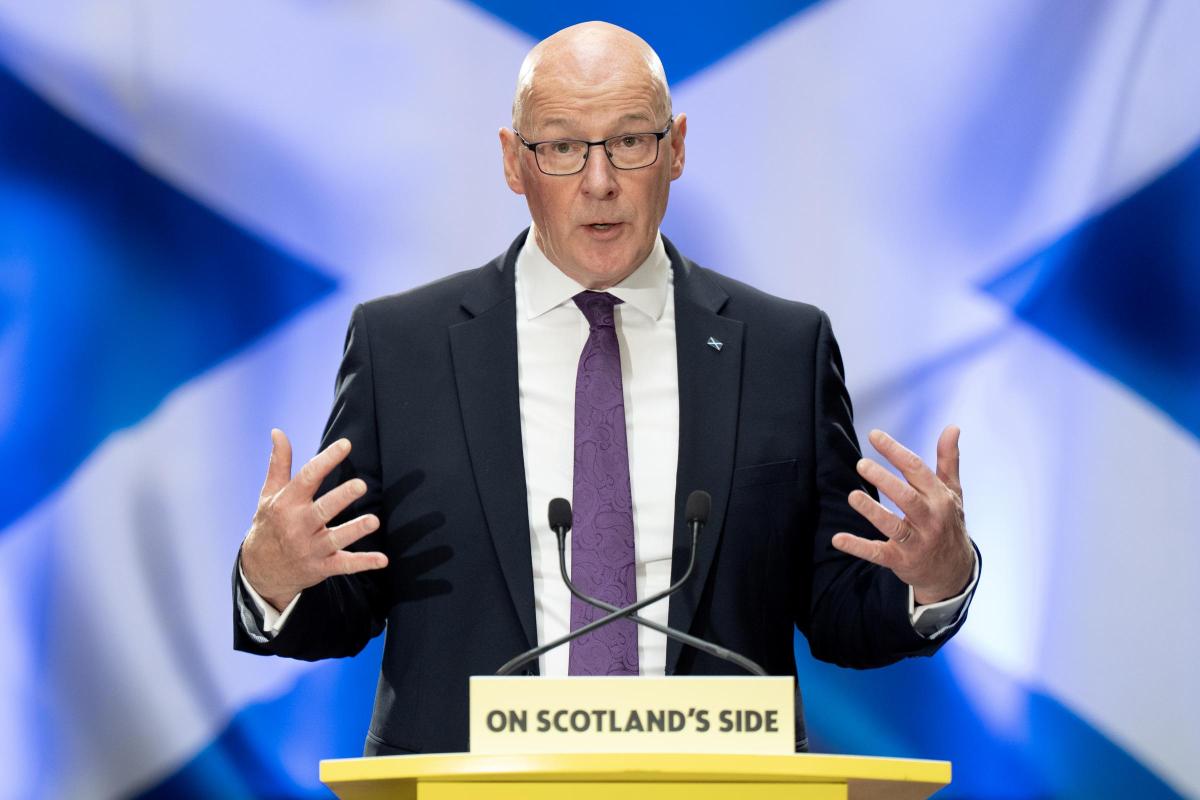
Should the figures, published on Monday, be repeated on May 7, the SNP will be returned to power in Edinburgh for a record fifth term. The party, now led by John Swinney, formed its first government in 2007 under leader Alex Salmond.
The SNP's conference agreed a motion last year proposed by Mr Swinney that a mandate would be based on the SNP winning a majority of seats in Holyrood. He has previously said a new vote on independence could be held in 2028.
With ten days to go before polling day, the Diffley Partnership released the opinion poll which puts the SNP winning 38% of constituency vote.
Reform is placed second in terms of the constituency vote, on 20%, Labour third on 18% and the Conservatives fourth on 12%.
On the regional list part of the ballot, the poll puts the SNP at 29%, Reform 19% and Labour 17%. The Conservatives and Greens are on joint fourth on 12%.
Diffley Partnership modelling projects that the seat shares for each party are as follows: SNP – 62 seats, Reform – 19 seats, Labour – 17 seats, Green-12 seats, Conservative – 11 seats, Liberal Democrats – 8 seats.
Read More:
- Reform UK controversies won't put off its supporters
- Greer reveals Greens standing in just six constituency seats
- John Swinney defends GP walk-in clinic despite long waits
- Holyrood 2026: What the election means for independence
- Sarwar: Labour manifesto admits 'we got it wrong’ on single-sex spaces
The poll, conducted using the Survation online panel, also finds Scotland evenly divided on the constitutional implications of the election.
While a narrow majority (52%) of voters say they would currently back independence in another referendum, opinion is split on whether election results would provide a clear mandate for holding another independence referendum, highlighting the continued uncertainty surrounding the independence debate alongside a highly competitive electoral contest.

Voters remain closely divided on the question of Scottish independence, the poll finds.
When asked how they would vote in another referendum, 52% say they would vote Yes, while 48% say they would vote No. The result of the independence referendum in 2014 was 55% for No, 45% Yes for independence.
Opinion is similarly split on whether election results would constitute a mandate for a referendum on Scottish independence.
A narrow majority (52%) agree that the election of a pro‑independence majority of MSPs would provide such a mandate, while 48% disagree.
When asked specifically about an SNP majority, the same division is observed: 52% believe it would give a mandate for another independence referendum, while 48% say it would not.
The poll also measures public favourability towards party leaders.
John Swinney records a net favourability score of –4, with 42% viewing the First Minister favourably and 47% unfavourably.
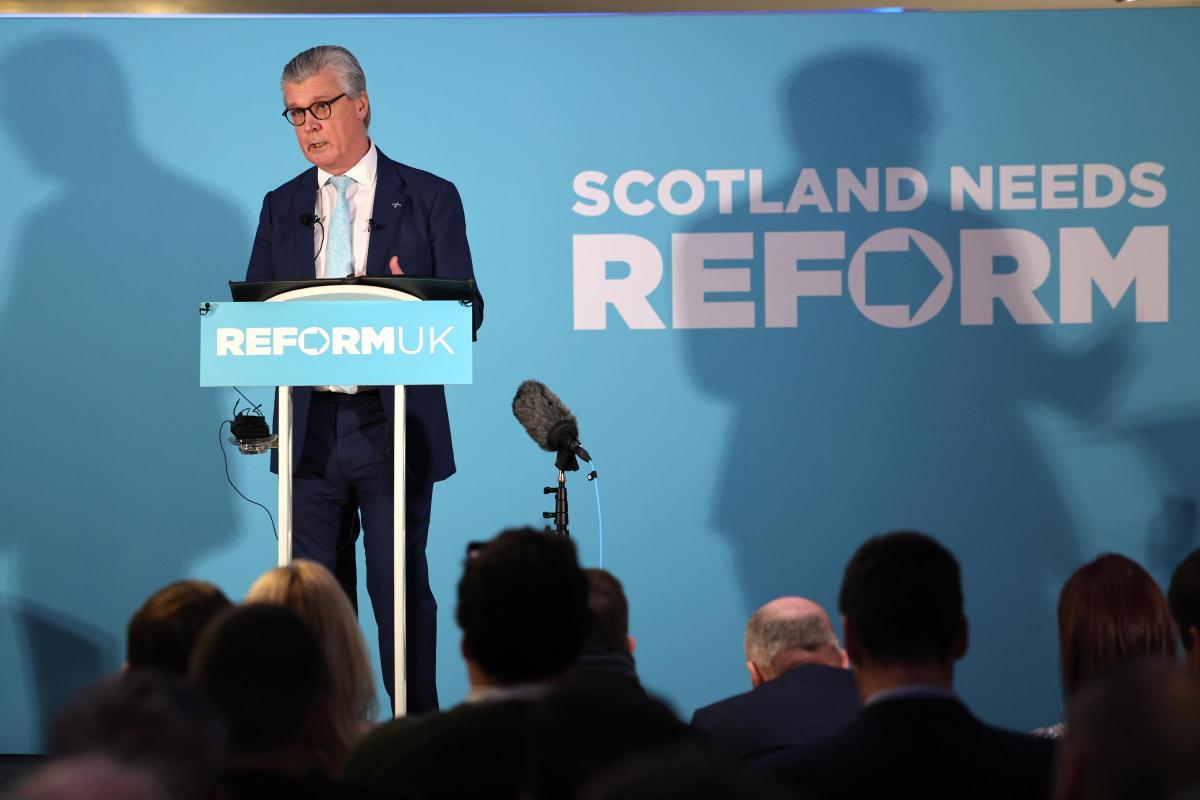
Anas Sarwar records a net score of –19 (31% favourable, 50% unfavourable). Malcolm Offord records a net score of –21, with 19% favourable and 40% unfavourable, while 41% say they do not hold a view.

Respondents also gave their views on coalitions.
Nearly half of voters (47%) say they would prefer a single party majority government following the election.
A smaller proportion (18%) favour a formal coalition between two or more parties, while 15% say they would prefer a minority government that works with other parties on a case by case basis. One in five voters (20%) say they do not know what type of outcome they would prefer.
The poll also asked respondents to consider how favourable they were towards different governing arrangements in the event that no single party secures a majority in the Scottish Parliament.

If shows that a SNP minority government is the most acceptable option to voters, with a net favourability score of –1 (42% favourable, 44% unfavourable).
This is followed by a SNP–Green coalition, which records a net score of –8 (40% favourable, 48% unfavourable).
A Labour minority government is less popular, with a net favourability score of –21 (34% favourable, 54% unfavourable).
A coalition involving Labour performs slightly better, at –17 (35% favourable, 53% unfavourable).
Any governing arrangement involving Reform UK records a net favourability score of –16 (36% favourable, 52% unfavourable).
This option also attracts the strongest strength of opposition, with 43% saying they would be very unfavourable towards such an outcome.
Scott Edgar, Senior Research Manager of Diffley Partnership, said: “This polling suggests a complex and finely balanced contest.
"While the SNP remain clearly ahead and on course to be the largest party, albeit short of an overall majority, support for the other parties is broadly dispersed.
"If these figures were repeated on polling day, Scotland would be heading towards a fragmented parliament, meaning relatively small shifts in support between now and next Thursday could have a significant impact on the final distribution of seats.
"At the same time, voters are divided on both the independence question itself and on whether a pro-independence majority in the parliament would amount to a clear mandate for another referendum."
The fieldwork for the poll was carried out from April 17 to 23. Some 1012 people took part.


Share