
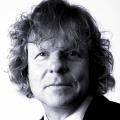


A senior boardroom figure has declared he is “not convinced by the argument that we’ve seen some wholesale brain drain because of higher taxation” in Scotland.
The greater income tax burden for higher earners in Scotland, relative to their peers elsewhere in the UK, is frequently a focus for political debate and criticism from some in the business community.
Steven Davis, the former human resources director of Sainsbury’s Bank who has just been appointed as a non-executive director of employee-owned executive search and recruitment business Livingston James Group, highlighted what he views as factors “equally important” to tax for Scotland in the “war for talent”.
Mr Davis said taxation formed part of the equation, but argued good schools, safe communities, strong career opportunities and effective public leadership were equally important as employers compete for the people they need to grow.
He warned that Scotland risks losing out in the battle for talent unless government, councils and businesses work together to make it an attractive place for highly skilled people to live, raise families and build their careers.
Mr Davis, who has developed a portfolio of board positions across different sectors since leaving full-time executive life around four-and-a-half years ago, including at Skipton Group, Peter Vardy Group and Scottish Ballet, said: “There are a number of areas where Scotland is incredibly progressive, creative and contemporary, and we have a huge amount going for us.
“But we are competing for the very best people. Tax matters, but I’m not convinced by the argument that we’ve seen some wholesale brain drain because of higher taxation. It is much broader than that. If you want talented people to come here, build careers and bring their families, you need attractive and safe communities, very good schools and great opportunities. Government and councils have a significant role to play in creating that environment alongside business.”
Mr Davis also called for more senior business leaders to consider moving into public life, highlighting his belief that Scotland would benefit from greater commercial and organisational experience in government.
His early career included eight years in the RAF before he joined Marks & Spencer, holding roles in the UK and internationally, including in Hong Kong. He later moved into financial services and became human resources director at Sainsbury’s Bank.
Mr Davis said: “There are lots of people in public life who genuinely want to do good things, but good intentions alone don’t necessarily give you the experience required to deliver change in large and complex organisations.
Read more
- Scottish income tax burden for higher earners 'under review'
- Scottish income tax burden for higher earners 'under review'
- Something very eye-catching on Scottish income tax front
- Scottish company announces 'next generation' leadership team
- All jobs lost as Scottish haulage company collapses into liquidation
- Drama intensifies at company founded by Scotland rugby star Bill Gammell
- New executive search firm launches in Scottish city
- Scottish company collapses with all staff made redundant
“I’d like to see more people who have led businesses, managed significant budgets and motivated large teams consider making that move. We need strong, experienced leadership in business and government.”
Mr Davis said non-executives had to remain “contemporary” as artificial intelligence, economic uncertainty and pressure on costs transformed the skills organisations require and the speed at which leaders must make decisions.
He said: “What I knew four-and-a-half years ago when I finished my executive career is already out of date. Good non-executives need to remain fresh in their thinking and understand what is happening outside the organisation as well as inside it.
“Businesses used to talk about five-year plans – in some sectors now, if you can confidently look five months ahead you’re doing well. Things are moving incredibly quickly, and that makes having the right leadership and talent even more important.”
Mr Davis voiced his belief that artificial intelligence (AI) should now sit high on almost every board agenda, but cautioned against viewing the technology simply as a way to reduce headcount.
He said: “The smartest organisations are asking what their core purpose is and how technology and their people can help deliver it better.
“That doesn’t necessarily mean fewer people. It could mean getting to market faster, responding to customers more quickly or giving teams the tools to take on broader and more interesting work. Organisations that don’t have this high on the agenda risk looking up and finding that others have become smarter and faster around them.”
Mr Davis said Glasgow-based Livingston James Group’s focus on long-term relationships with clients and candidates, together with its employee-ownership model, had influenced his decision to join.
The group transitioned to employee ownership in 2023 and comprises executive search and leadership advisory business Livingston James and specialist finance recruitment practice Rutherford Cross.
Mr Davis said: “One of the reasons I joined was because it is employee-owned. There’s something powerful about people having skin in the game, ownership and a personal commitment to the organisation.”
He added: “I’m interested in what that means for the colleagues who own the business, but also how we turn it into a genuine point of difference for the organisations we work with.
“It is a privilege to work with an organisation like this at such an exciting time.”
The appointment of Mr Davis follows a leadership restructure at Livingston James Group in July, in which Mark Lewis became chief executive after 15 years with the business, while co-founder Jamie Livingston moved from CEO to chair.
Sophie Randles became managing director of Livingston James and Hazel Wynn managing director of Rutherford Cross, with both joining the group board.
Mr Davis joins the board as Karen Scott steps down after 10 years, following her retirement.
Mr Lewis said: “Steven brings exactly the breadth of perspective we want around our board table. He has spent his career at the intersection of people, leadership, organisational change and commercial performance, operating at the highest level across very different sectors.
“We have ambitious plans to grow geographically and across our permanent, interim and fractional services. Steven’s experience, curiosity and willingness to challenge our thinking will be hugely valuable as we enter this next phase.”
Mr Livingston said: “Steven understands both the human and commercial sides of building successful organisations. He shares our belief that business should be built around long-term relationships and positive impact, making him an excellent fit for Livingston James.”


Share