



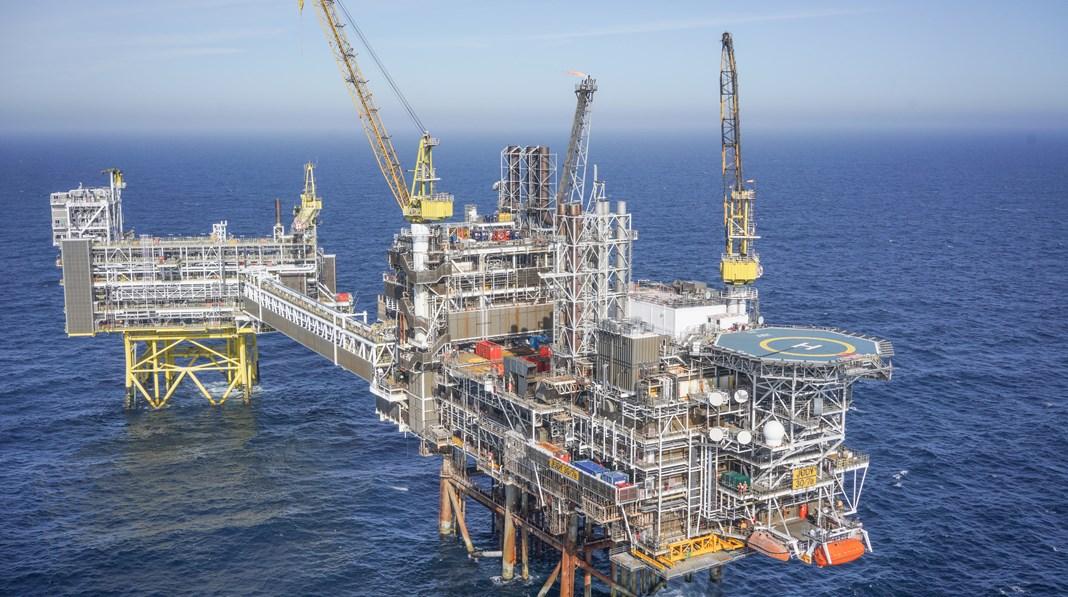


Amid talk of a crisis in the North Sea an oil giant has underlined the appeal of assets in the area after making hefty job cuts which it blamed on the windfall tax.
As the end of a year that is reckoned to have been one of the toughest ever for the North Sea oil industry approaches a giant has undermined the case for the Government to provide help with its shows of apparent corporate greed.
Industry leaders in Aberdeen say the Chancellor, Rachel Reeves, signed the death sentence for the North Sea last month when she decided to leave the windfall tax in place.
They claim the Energy Profits Levy (EPL) has put huge strain on the finances of North Sea firms since it was first imposed by the former Conservative Government in 2022. In her Budget last year, Ms Reeves raised the headline rate to 78%, from 75%.
Robert Gordon University has estimated that job losses have been running at 1,000 a month although Ms Reeves questioned that figure this month.
With the SNP’s leader at Westminster Stephen Flynn insisting the claims are realistic, one of the North Sea’s biggest producers has helped lend them credibility by axing around 700 jobs.
However, the arguments it has used to justify the cuts look increasingly flimsy.
Read more
- Budget to 'kill off North Sea oil industry within five years'
- As Chevron closes Aberdeen office, what now for North Sea jobs?
- SNP Government hopes for floating windfarm boom sunk by North Sea oil giant
- Israeli-owned North Sea firm posts $1.5bn profit amid acquisition spree
Harbour Energy cut 350 jobs in May 2023 in a move it blamed on the windfall tax.
But analysts had predicted that it would make cuts on that scale long before the windfall tax was imposed. Harbour’s acquisition of Premier Oil in 2021 created scope to rationalise duplicated functions.
Harbour announced a further 250 cuts in July when it said it was reviewing its UK operations “to align staffing levels with lower levels of investment, due mainly to the Government’s ongoing punitive fiscal position and a challenging regulatory environment.”
At the start of this month Harbour caused more uncertainty for staff in Scotland when it said it planned to axe around 100 offshore jobs.
Uk business head Scott Barr said then: “The UK oil and gas sector faces sustained pressure from lower commodity prices and an uncompetitive tax regime, worsened by the government’s decision to retain the Energy Profits Levy in the recent Budget.”
Mr Barr cautioned: “Harbour’s UK Business Unit will continue to struggle to compete for capital within our global portfolio while the EPL remains.”
But the grumbling about hard times ignores the fact that Harbour has continued to make plenty of money in the North Sea since the windfall tax was introduced.
The biggest competition for investment Harbour’s North Sea business faces may come from the apparently insatiable demands of the group’s shareholders for payouts.
The company paid out around $1.5bn (£1.1bn) in the three years to December 2024 through dividends and share buybacks.
The bulk of the payouts went to investors based outside the UK.
American private equity firm EIG appears to have profited handsomely from the investment it made in Harbour during the downturn that started in 2014. It backed the former Chrysaor on a push for rapid growth that involved acquiring big North Sea portfolios at attractive prices.

EIG remained a significant shareholder in Harbour after German chemicals group BASF acquired a 46% stake in the business last year in a $11bn deal. In exchange BASF sold Harbour an international oil and gas portfolio that included significant positions in Norway, where the tax rate is also 78%.
Since that deal was completed industry leaders have complained that the windfall tax has become increasingly unfair as oil and gas prices have fallen well below the levels they reached in 2022, after Russia launched its full-scale invasion of Ukraine.
Those claims will probably win little sympathy from UK householders as they try to keep their homes warm. Energy prices are still much higher than before Russia made its move.
Meantimes, oil and gas prices remain well above most firms’ cost of production.
In a trading update issued in November Harbour said it has been producing oil and gas at an average $13 per barrel of oil equivalent this year.
Brent crude has been selling for at least $60 per barrel since 2021.
In the update, Harbour reiterated the prediction that it would generate $1bn cash this year “despite the lower commodity price environment”.
The company said it expected to pay out around $0.55bn to shareholders this year.
Harbour will also be able to use the cash it generates in the North Sea to help fund the $3.2bn acquisition of a portfolio of assets in the Gulf of Mexico from LLOG Holdings, which it announced last week.
The bullish moves are hard to square with the comment that Mr Barr made about commodity prices.
The remark he made about the waning appeal of the UK looked even harder to justify after Harbour unveiled a bumper North Sea acquisition within days of announcing the latest job cuts.
On December 12 the company said it had struck a $170m (£130m) deal to acquire stakes in the giant Catcher and Kraken fields off north-east Scotland. Harbour would have been in a strong position to negotiate a good price for the assets, which it bought from Waldorf group businesses that fell into administration after expanding rapidly.
The company noted the deal would allow it to acquire profitable additional production and would be “immediately materially accretive” to its cash flows.
It said the deal could be funded easily “through readily available sources of liquidity”.
The announcement also highlighted that the appeal of the Waldorf assets was boosted by the fact they would come with around $4.2bn of tax losses.
Harbour will be able to use these to achieve a big reduction in the tax bills it pays on the profits generated from North Sea production , even if the headline rate remains at 78%.
The boast about the losses underlines the fact that elements of the North Sea tax regime remain very generous.
The deal provides further confirmation that for all the complaints about the windfall tax leading oil and gas firms see attractive investment opportunities in the North Sea.
Serica Energy and Israeli-owned Ithaca Energy have remained enthusiastic buyers of North Sea assets.
This month North Sea-focused Serica acquired a portfolio that included a stake in the giant Cygnus field from Scottish Gas owner Centrica in a deal worth an initial £57m.
Noting the deal would allow Serica to acquire high quality assets, chief executive Chris Cox said: “The transaction will require only modest cash outflow on completion and is set to generate material cash flows.”
Serica and Ithaca have also shown they are willing to invest in developing new North Sea fields although the windfall tax is currently set to remain in place until 2030.
Ithaca recently highlighted the progress it has made in respect of the proposed Rosebank and Cambo developments off Shetland, which could support thousands of jobs.
Last week it submitted environmental paperwork for the proposed Fotla field development east of Aberdeen.
Ithaca has been able to fund hefty development spending while making generous payouts to investors.
While Serica and Ithaca see enduring potential in the North Sea, Harbour seems to be focused on short-term returns.
Harbour has completed small scale developments to boost production from existing fields in recent years, from which it expects to achieve a quick payback. Such work generates limited benefits for the supply chain.
The concern is that the approach followed by Harbour Energy will become the norm as firms look to maximise the profits they make on the production from North Sea fields without developing new ones.
Amid uncertainty about the prospects for the economy and the geopolitical outlook, the UK badly needs firms that will help it make the most of oil and gas reserves that took millions of years to develop rather than treat the North Sea as a cash cow.


Share