




While SNP Government predictions that renewables would fuel a boom in Scotland have proved mistaken an energy giant is creating valuable jobs in support of the drive to electrify the economy.
Scottish energy giant SSE has generated interest in London for creating the kind of green jobs the Scottish Government has been unable to deliver after facing down a US investment giant that has been making trouble for a North Sea stalwart recently.
Perth-based SSE has been recruiting at pace as it looks to develop the capacity required to implement plans for a big upgrade of the electricity transmission networks it operates in the Highlands.
The FT has noted that SSE expects to increase employee numbers in its networks business by 1,000, to 3,500, over the next five years.
The moves come four years after SSE directors came under pressure from New York-based Eilliott Management to break up the group.
Glasgow-based ScottishPower has also been on a hiring spree and plans to double its networks headcount to 2,600 from 1,200.
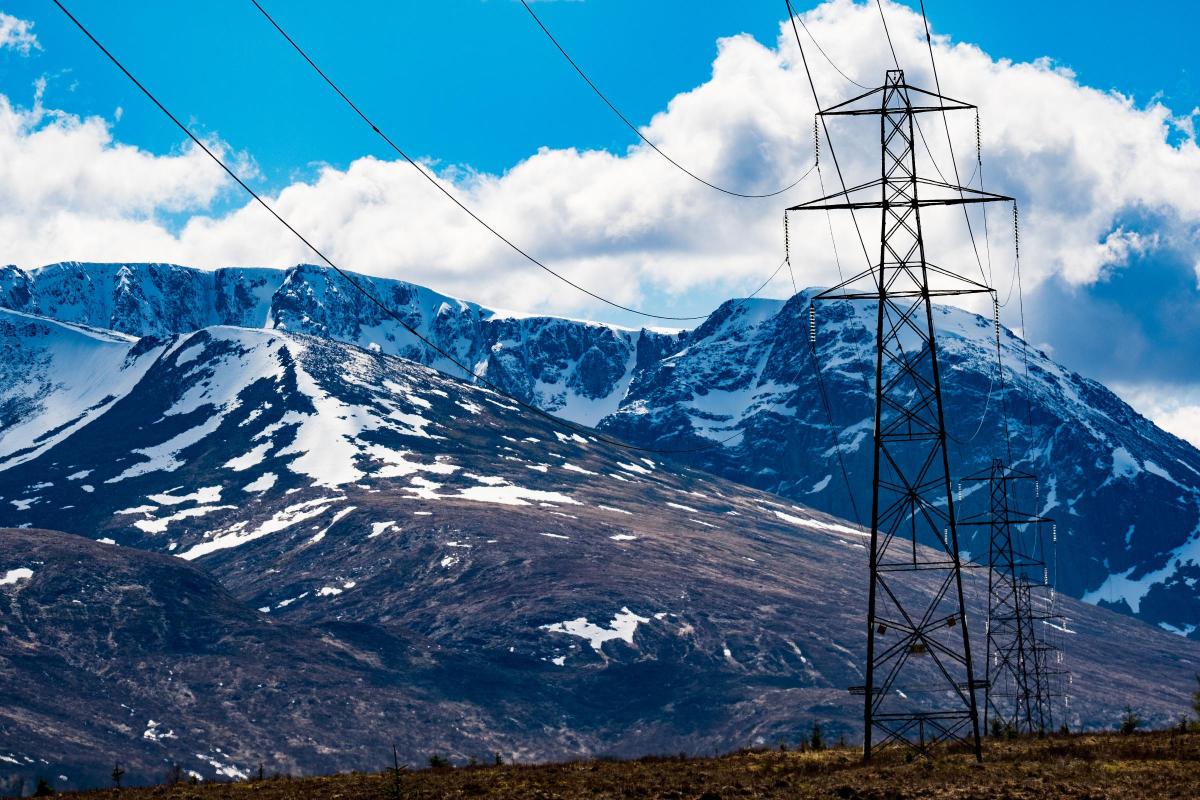
The recruits will work on the development of the new high voltage lines that will be required to take the output from windfarms in rural Scotland and off the country’s coasts to centres of demand in England.
Scotland badly needs the kind of skilled jobs concerned after SNP Government claims the country was in line for a green economic bonanza proved to be wildly over-optimistic.
Read more
SNP Government boast about Scotland's renewables 'blessings' looks daft after setbacks
Just transition fund farce deepens as Scottish firms fight over windfarm scraps
Budget to 'kill off North Sea oil industry within five years'
Scotland counts cost of oil giant's huge investor payouts
SSE £33bn plan to 'rewire North of Scotland' hailed as once in generation project
First minister John Swinney stuck to the script last week when he tried to ramp up the SNP’s campaign for the elections to the Scottish Parliament scheduled for May.
Claiming that unemployment in Scotland is significantly lower than the UK average, he boasted: “Our renewables industry continues to grow and grow – powering our green economic future.”
Mr Swinney did not offer any evidence to support that claim.
In November Shell scrapped plans to develop a floating windfarm off Scotland that was expected to provide £3 billion work for the supply chain in the country.
While lots of windfarms have been developed in Scotland investors based outside the country are set to hog most of the profits they will generate. The Scottish supply chain has enjoyed little benefit.
Mr Swinney was talking days before the third anniversary of the publication of the draft energy strategy that was developed while Nicola Stugeon was first minister.
Ms Sturgeon was happy to throw the North Sea oil and gas industry under a bus as she courted the green vote. She opposed plans for the proposed Cambo oilfield development off Shetland while her energy strategy recommended a presumption against further exploration in the North Sea.
The strategy assumed Scotland could afford to let the oil and gas industry wither because renewables would quickly replace it.
The SNP Government has yet to publish the final version of the energy strategy.
Donald Trump’s attempt to secure US control of Venezuela’s vast oil reserves reflect expectations that demand for hydrocarbons will remain strong for years. Scotland would become increasingly reliant on imports under the SNP Government’s plans.
SSE and ScottishPower’s networks investment could help to address a problem with renewables that ministers seemed to ignore, related to the fact that most windfarms are miles from urban centres where there is most demand for energy.
Lots of the power they could generate has been wasted because the country does not have the networks required to take the power to where it is required. Operators of Scottish windfarms have been paid huge amounts of compensation to curtail output in times of low demand.
Last month the energy regulator, Ofgem, approved plans for £10bn investment in the electricity transmission network over the next five years. It said the upgrade concerned would support the electrification of the economy and drive growth.
SSE and ScottishPower will be leading players in the drive and can expect to be rewarded handsomely.
The latest results published by SSE underline how profitable the networks business can be. The company saw the profits generated by its transmission division surge to £389m in the six months to September 30, from £210m in the same period of the preceding year.
In an update on strategy issued alongside the results SSE noted that it planned to increase investment in networks and in renewable energy generating assets significantly.
It said both could be expected to deliver “attractive growth and returns”.
SSE bosses probably feel some vindication for the decision that they made to invest in both renewables generation and networks despite facing noisy demands that they should split the group up from Elliott.
In 2021 the fund manager tried to stoke an investor rebellion at SSE as it insisted the transmission and generation businesses did not belong together.
Elliott called for new directors to be appointed to SSE’s board but the management team led by Alistair Phillips-Davies stuck to its guns.
After posting strong growth in first half profits in November 2022, SSE directors said:
“Networks have long been an underlying value driver for SSE, and that is even clearer now.”
Having both businesses gives SSE exposure to different earnings streams while allowing it to benefit from synergies.
In July Mr Phillips -Davies was succeeded by Martin Pibworth, who underlined his belief in the value of SSE being an integrated business amid the drive to electrify the UK economy.
He said: “In our highly dynamic operating environment, we have the capabilities and portfolio to manage complexity and volatility, whilst pivoting towards value as it emerges.”

The SNP Government should be grateful to SSE for providing it with badly-needed opportunities to hail advances on the green economic front.
SSE has shown a willingness to use its investment muscle to support wider economic developments.
In September the company awarded a £100m contract to East Lothian-based Had Fab to produce steel towers for use on the Spittal Beauly line
Weeks later SSE announced that it would help fund the development of 1,000 homes across Northern Scotland. Homes will be used to accommodate networks staff initially then made available to the wider community.
One wonders what Elliott would make of firms acting with such social considerations in mind.
It should be remembered though that SSE expects to be able to make big enough profits to support generous payouts to investors.
The company faced flak in the past for having the turbine blades used on developments such as the giant Seagreen windfarm made outside Scotland.
The SNP Government will probably not want to highlight the fact that SSE and ScottishPower’s investment will benefit from the support of households across the UK.
The cost of related subsidy schemes are added to energy bills.
Ofgem has noted that £60 will be added to energy bills in coming years to fund the latest electricity networks investment programme.
In the meantime, Elliott has turned its attention to an oil and gas giant that once helped inspire hopes that Scotland could be set for a huge increase in offshore windfarm development.
Elliott has amassed a significant stake in BP, which talked about investing £10bn in areas such as offshore wind development and hydrogen production in Scotland under former chief executive Bernard Looney.
Mr Looney proposed to transform BP into a broader-based energy company and to reduce its oil and gas production but stepped down in 2023 after failing to disclose some details of past relationships with colleagues.
Mr Looney’s successor Murray Auchincloss said he would refocus BP on oil and gas but soon faced complaints he was not moving fast enough.
Mr Auchincloss was ousted last month following reports of agitation for management changes at BP by Elliott, amid pressure on the company to cut investment in renewables.
With US oil industry veteran Meg O’Neill set to succeed Mr Auchincloss in April, the future of BP’s renewables projects in Scotland looks uncertain.
Scotland may enjoy some benefit if Ms O’Neill decides that BP should increase investment in its remaining North Sea oil and gas interests. SNP ministers would surely not have the gall to claim any credit for such moves, or would they?


Share