



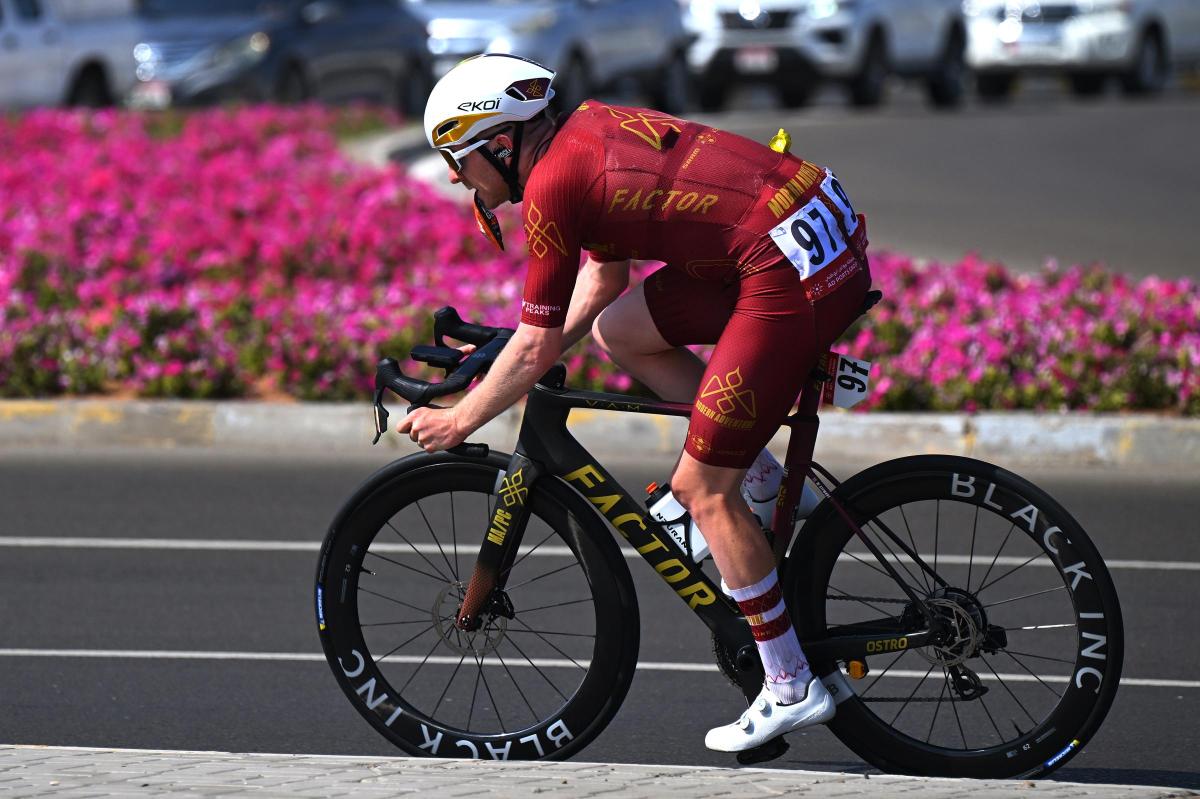
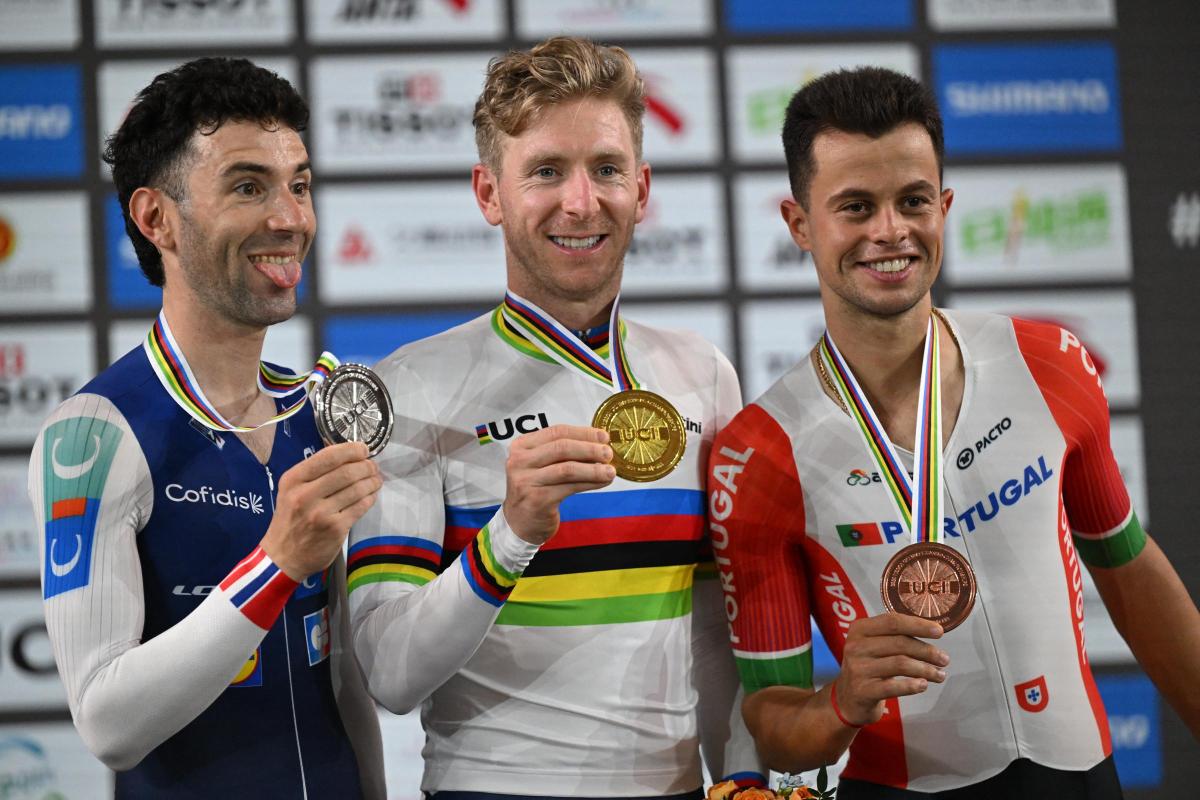

Never does a world title come easy to any athlete.
But Mark Stewart’s magnificent gold medal-winning ride this week has been as hard-earned, and in turn as well-deserved, as any in the history of Scottish sport.
When Stewart topped the leaderboard in the points race at the UCI Track Cycling World Championships in Shanghai on Friday, he claimed a world title that has been well over a decade in the making.
Stewart made his international debut over 12 years ago, at the Glasgow 2014 Commonwealth Games. In the 12 years since those Games, Stewart has picked-up an impressive haul of silverware, including Commonwealth Games gold. But, at the World and European Championships, he’d long been the nearly-man, winning a handful of silver and bronze medals. But a world title had eluded him.
No longer. Stewart is, finally, world champion. And the Scot's delight and relief when he crossed the finish line as winner were clear for everyone to see.
Stewart’s points race victory in China was so mightily impressive for a number of reasons.
Firstly, the manner in which he won the race, which takes place over 160 laps of the velodrome, was remarkable. In what was a hugely entertaining race, things started to go Stewart’s way in the final quarter, with the Scot ultimately finishing on 35 points, seven ahead of Frenchman, Benjamin Thomas. It was a monumental moment for Stewart personally, Scottish cycling and Scottish sport as a whole.

What makes 31-year-old’s world title so particularly welcome is quite how popular and liked an individual Stewart is within Scottish sport. He is, without question, one of my favourite interviewees. He’s self-depreciating, thoughtful, intelligent, interesting and, unusually, open to speaking about everything and anything.
When I interviewed him in these pages just a few months ago, he displayed all of these qualities in abundance. He claimed he’s “not as talented as the very best riders”, a suggestion that must surely be challenged given he’s now world champion. He talked about finding joy in the journey rather than purely in results - an attitude that is remarkably rare within elite sport these days. And he’s spoken previously about the perspective the ups and downs he’s been through have given him - being a good bike rider is, in no way, shape or form, the only thing that matters to him in life. It is, almost certainly, this perspective that’s propelled Stewart to become world champion for the first time.
And so, given his ability on two wheels, coupled with this unfailingly healthy attitude that he possess, Stewart is close to the perfect role model for not only for any young rider, but any young athlete. I can think of few better sportspeople for any kid to attempt to emulate.
But Stewart’s career provides valuable lessons in more ways than merely his exemplary mindset.
The Dundonian has followed a career path that diverges significantly from that which many believe is necessary to reach the top. Stewart has been in, then out, then in again British Cycling’s performance programme. And he’s had spells in his career when riding his bike came a distant second in terms of priorities to just earning a living. This is not the kind of life anyone imagines for someone who has aspirations of becoming world champion. But it’s this journey that has shaped Stewart, and will ensure the Scot will enjoy the world title he won this week possibly more than any other rider who has also won world gold over the past few days.
Read more: Mark Stewart on finding joy in the journey, a surprise medal and riding for Hincapie
Oscar Onley on his historic season, Netcompany–Ineos and World Champs goals
Over a decade ago, Stewart, who also rides on the road, was invited to join British Cycling’s elite performance programme as a fresh-faced teenager. At that point, anyone in his position would have envisaged their occupation for the next decade-or-so being as an international rider who was, most likely given British Cycling’s reputation as a ‘medal factory’, going to accumulate silverware at a rapid rate.
This partially materialised, with Stewart winning World and European bronze and Commonwealth gold between 2016 and 2018.
But his upward trajectory was abruptly halted when, in 2020, he was unceremoniously dropped from the British Cycling programme. For many riders, this would have been the end of their cycling career. But Stewart, as is his style, just got on with life. He relocated to New Zealand, where his partner and fellow rider, Emma Cummings, hailed from and became a ‘normal person’ who rode his bike purely for enjoyment.
No longer paid to be a cyclist, he became a baby-sitter, dog walker, life-guard and teacher and, on occasion, chose to get up at 3am to ride his bike because if he didn’t ride at that ungodly hour, he had no time in his day to cycle.
Indeed, during the Tokyo 2020 Olympics, Stewart recalls watching the cycling events on television while, at the same time, cleaning toilets as part of his life-guarding duties. Rather than feel bitterness about his situation though, as many would have, he did, he recalls, see the humour in how things had panned out. This anecdote alone shows quite what a remarkable individual Stewart is.
And so, when he was invited to rejoin the British Cycling programme in the lead-up to the 2024 Paris Olympics, Stewart was under no illusions as to quite how privileged a position he was in becoming a professional athlete once more.

Since his return to the elite ranks, he’s become an Olympian, won a brace of World silvers, a Commonwealth silver and, best of all, become world champion.
Many Scots have won world titles across an array of sport over the years. So few have reached the top in the way Stewart has.
But it’s this higgledy-piggledy career trajectory that makes Stewart such a fascinating case study.
Sport these days is dominated by the opinion that the only way to the top is to be in an elite set-up ridiculously early (in some cases, as young as five or six years of age), and remain there for the duration of your career. A laser-focus on sport is, many believe, a must, with many other aspect of life sacrificed in the pursuit of sporting success. Any other potential routes to the top are, almost always, dismissed.
But Stewart has, this week, shown that there’s more than one way to the top. And this is why, in addition to the fact that he’s a hugely likeable guy, his world title should be lauded far and wide. Here’s someone who’s Scottish born and bred who has become the very best in his sport in a way most would have said was impossible. Not many individuals go from cleaning toilets to the top step of the World Championships podium in just a few short years.
But Stewart has. And this is why he should bask in every single second of his success.


Share