


A leading expert on antisemitism and extremism has warned far-right ideologies are being smuggled into the mainstream under "plausible deniability".
Following the furore over his salute at the inauguration of Donald Trump, Elon Musk addressed the Alternative für Deutschland party and said Germans should 'move on' from guilt over the Third Reich.
The AfD's leader in the state of Thuringia, Bjoern Hoecke, condemned the Holocaust memorial in Berlin, telling supporters Germans were the "only people in the world who planted a memorial of shame in the heart of their capital".
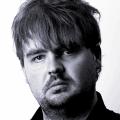
Vlad Khaykin is the Executive Vice President of the Simon Wiesenthal Center, a human rights organisation named for a celebrated Nazi hunter, and describes Musk's salute as "really disturbing".
Read More:
-
Elon Musk's salute at Donald Trump's inauguration isn't MAGA's first fascist link
-
Dozens of neo-Nazis in Scotland exposed by Swedish website hack
-
Humza Yousaf provides Elon Musk education on murder of Kriss Donald
The Center monitors extremism and antisemitism around the world, and some common themes emerge.
Following the decision to house asylum seekers in the Muthu hotel in Erskine, the far-right group Patriotic Alternative used a local Facebook page to drum up opposition under the hashtag #ErskineSaysNo.
The group was also behind a campaign to have a new bridge over the M8 named after Kriss Donald, the teenager murdered by a Pakistani gang in a racially motivated attack. In neither case was its far-right leanings made explicit.
Homeland, which split from Patriotic Alternative, has close to 30,000 followers on Musk's social media platform.
Mr Khaykin says: "These groups will try to nudge-nudge wink-wink their way through this because most normal people are turned off by content that comes across as raging, vitriolic, non-ironic hatred. And they say this explicitly, by the way, I'm quoting almost verbatim from one of the proprietors of the one of the most influential white supremacist sites on the internet.
“They've been engaging in all kinds of activities to make their message more palatable; packaging it in language and symbolism that is going to have a wider appeal.
"Back in the day David Duke, the former head of the Ku Klux Klan, made a decision to take off the Klan hood and the robes and put on a suit and tie to make himself and his group seem more respectable. He rebranded the Klan as a white civil rights organisation: ‘we’re not a hate group, we’re defending the rights of white Americans’.

“If people people are calling for mass deportations, if they’re saying that the Holocaust memorial in the centre of Berlin is a monument to something that should have never happened, it should make people really concerned.
“These people have some very scary policies and some very scary associations – we should judge them on the basis of the full context rather than the self-branded talking points they put out there.
"These are political movements, they have political aims.
“They're not just out there to terrorise people or to hurt people's feelings, they have a political agenda that they’re working towards.
"White supremacists and other far-right groups were among the earliest adopters of Internet technologies, because they understood the power of networked computer systems.
“Today they use social media, which I think has become the most effective propaganda delivery mechanism that we’ve ever seen in human history.
“It’s increasingly moving toward eliminating the moderation and fact-checking on these platforms.
"When Elon Musk took over Twitter he made it a point to invite a number of formerly banned neo-Nazis back to the platform, essentially handing them one of the world’s biggest megaphones.
“I think that's really disturbing, there’s nothing that compels him to do that.
“Everybody has their right to freedom of speech but as the owner of a private platform like Twitter, you are under no obligation to extend use of that property to spread those ideas."
As well as couching some of their more extreme views in the language of mass appeal, far-right movements have sought to downplay historical wrongs.

Close to the parliament in Budapest there has been a decade-long protest against a statue, 'Memorial for Victims of the German Occupation', placed in Liberty Square by Victor Orbán which depicts a German eagle attacking Hungary and dedicated to "the victims".
The city's Jewish community, as well as the gay and Romani community, argue this is an attempt to whitewash the role of the Hungarian state and many of its people in the holocaust - Ferenc Szálasi's Arrow Cross party were singularly responsible for the deportation of 650,000 Hungarian Jews to the death camps and for the killing of 10,000–15,000 on the spot, many shot in the back of the head and dumped into the Danube.
Mr Khaykin says: "Efforts at denialism began before World War II was over.
“People who deny the Holocaust, or downplay the Holocaust and their participation in it, are really continuing the work of the Nazis themselves.
“Before the war was even over they were already covering up their atrocities, creating propaganda films during the war such as in Theresienstadt (in Terezín in the modern day Czech Republic) where they painted a rosy picture of Jewish internees engaging in musical productions and theatre, having a lovely time and almost making it seem like a holiday camp.
“Those efforts are nothing new, but the fact there’s been a resurgence of those efforts in the last decade or so is very troubling.”
The American comedian Chris Rock observed the phenomenon in the lead-up to the Iraq War, "weird white guys getting overly patriotic" as he put it.
He observed the discussion turning from a general disdain of foreigners, to the French, to illegal immigrants.
"And that's when I started listening," Rock intones. "Because I know n*****s and Jews are next - that train's never late!"
Recent years have seen the mainstreaming of ideas like the 'Great Replacement' which holds that there is a Jewish-led conspiracy to replace the white population of Europe and North America with immigrants, or 'cultural Marxism', an echo of the Nazi idea of 'cultural Bolshevism' which accused Germany's Jews of pushing communism to try and undermine the state.
In a post on X, formerly known as Twitter, Elon Musk replied to an account accusing Jewish people of "pushing the exact kind of dialectical hatred against whites that they claim to want people to stop using against them" with the words "you have said the actual truth".

“The Great Replacement Theory used to be largely relegated to the extremist right, but increasingly we’re hearing it from more mainstream politicians, both here in the United States and in Europe.
"That particular conspiracy theory has not only led to violence against the Jewish community – in fact the deadliest act of antisemitic mass violence in US history at the Pittsburgh Tree of Life Synagogue – but violence against the Black community, the Latino and Hispanic community here in the United States, and internationally also against the Muslim community.
"Antisemitism always adapts to the environment that it’s operating in, and in a post-Holocaust world overt, explicit antisemitism is often not acceptable in polite company.
“In a place like Germany, given its history, they have very strong laws against Nazism, things like using old Nazi slogans, giving the Heil Hitler salute, and Holocaust denialism.
“This plausible deniability is a common aspect of how these extremist ideas are communicated today in a world in which it's often not okay to be explicitly racist, xenophobic, antisemitic, and so on.
"Historically, antisemitism rarely shows up on the scene alone, it tends to be accompanied by an entourage of anti-social, anti-democratic and anti-intellectual phenomena – attacks on democratic institutions, the erosion of democratic principles, the proliferation of conspiracy theories, the proliferation of xenophobia, homophobia, anti-Arab racism."
The rise of extremist ideas can't be divorced from the state of the world, with inequality growing in western societies and communities feeling they've been left behind.
Mr Kahykin says: "Historically antisemitism and xenophobia tend to rise in a society along with collective anxiety.
“That collective anxiety can be induced by any number of factors that lead to uncertainty about the future – one’s standing in society, one’s economic prospects.
“When that happens human beings tend to circle the wagons and start asking ‘who is one of us?’ and who is ‘one of them?’. ’Them’ represents the people I feel are threatening me, my future, my family, my race, my country, the world.
"Over the last decade or so we had a massive pandemic, there's been political unrest and instability, there have been economic troubles, there have been a number of foreign wars.
"In the absence of a sense of empowerment to participate in the institutions of government, in the processes of democracy - where people either don’t know how to participate or there’s a certain opacity in the way government functions – in the presence of that you have fertile ground for conspiracy theories.
“If I as a citizen don’t feel that I can exert control over my government, if I can’t vote to determine the political trajectory of my country… well, if I’m not in control then who is?
“You start to look for that shadowy cabal who are really in charge and really pulling the strings."


Share