


Farmers in the highlands are in a battle with a Russian billionaire over the proposed sale of a 9,000-hectare estate on the River Spey.
The Tulchan Estate has been listed for sale by Savills with a guide price of £67million, boasting a 14 bedroom Edwardian lodge, salmon fishing, deer stalking, pheasant and partridge shooting and five tenanted farms.
So far so dull, but beneath the surface lies a web of companies, a longstanding legal loophole and even a long-running battle with the Kremlin.
In the fine print of the listing by Savills, it's made clear that in a purely legal sense the estate is not for sale. What's actually being marketed is a 100% share in Tulchan Sporting Estates Limited, the company which owns the land.
Read More:
- Highland sporting estate up for sale with £67m price tag
- Greens urge government to end Russian-linked gas contract
- Released Marinera sailors 'did not want to go back to Ukraine'
That's important, because it means the farmers on those five farms will not have the opportunity to buy their land as envisioned in the Agricultural Holdings Bill.
Under the legislation, tenant farmers have the right to pre-emptively declare their interest in buying their farm if the estate is sold.
However, as the sale is taking place as a transfer of company shares rather than as a direct land sale they will not be able to exercise that right.
A briefing note delivered to MSPs by the Scottish Tenant Farmers Action Group (STFAG) in 2007 warned of this potential loophole: "This simple device completely circumvents a pre-emptive right to buy. The company will never offer up the land for sale, but instead the owners of the company will sell their shares in the company."
So, who are the owners of the company?

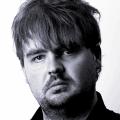
The answer is somewhat convoluted, of which more later, but ultimately the Tulchan Estate is owned by Yuri Viktorovich Shefler, a 58-year-old Russian with an estimated net worth of $1bn.
Born in Oryol in what was then the Soviet Union, like many Russian billionaires he made his money following the collapse of the USSR.
In 1991 Boris Yeltsin, the first president of the newly-independent Russia, introduced a programme of 'economic shock therapy' to transform the system from a command economy to a liberal capitalist one.
In October the following year the mass privatisation of state-owned industries - ergo, almost all of them - began with 148 million 'privatisation vouchers' sent out to citizens.
In principle, the idea was to introduce the Russian populace to capitalism by making them shareholders in the former state companies, with the vouchers able to be freely sold or traded and usable for acquiring equity.
In reality the lifting of price controls caused extreme inflation which peaked at 2,300% in 1992, meaning most were only too happy to sell their vouchers or trade them for food.
Anyone who had already acquired a bit of capital therefore found themselves in an enviable position, where they could acquire huge stakes in former state enterprises for virtually nothing.
Shefler, a computer salesman, acquired a blocking stake in Vnukovo Airlines (previously a division of Aeroflot), as well as in GUM, the state department store, and TSUM, a high-end shopping mall.
By 1995 Yeltsin was staring down the barrel of defeat in the following year's election, with the Communist Party expected to regain power.
With the government desperate for money he turned to the newly-minted oligarch class, who provided loans to the government in exchange for massive shares in the remaining state enterprises.
Roman Abramovich paid $200m for a stake in oil company Sibneft he later sold back to the Russian government for $11.9bn; Vladimir Bogdanov acquired 40% of Surgutneftgas for $89m; and Mikhail Khodorkovsky's bank Menatep bought 78% of Yukos for around $300m.
While Shefler wasn't involved in the loans for shares programme he, too, benefitted massively from the chaotic move to privatisation.
While president of the state company Soyuzplodoimport in 1997 he formed another, private company with almost the same name - Soyuzplodimport - which paid $300,000 to acquire 43 of Russia's main vodka brands and granted licenses to various vodka manufacturers all over the world.
The brands now controlled by Shefler included Stolichnaya, Moskovskaya and Riga Balsam.
Stolichnaya had been sold in the United States by PepsiCo under a barter agreement with the Soviet Union in which the soft drink would be sent to the USSR in exchange.
When Americans boycotted the vodka in response to the Soviet-Afghan war, the Soviets sent 17 submarines, a cruiser, a frigate, and a destroyer in exchange instead, meaning Pepsi for a brief time had the sixth largest navy in the world. The vessels were ultimately sold for scrap.
The Russian state did not take kindly to Shefler's move, opening a case against him for 'illegal use of trademark' in 2001 and eventually extending the charges to include organisation of a criminal community, threat of murder, smuggling, illegal business activity and money laundering.
The businessman fled to Latvia then London, eventually acquiring both British and Israeli citizenship.
Those charges were eventually dropped but Shefler and the Kremlin continue to battle over trademarks in courts across the globe.
In 2012 the Dutch courts ruled Stolichnaya and Moskovskaya belong to the Russian Federation; in the United States and Australia Shefler's SPI Group prevailed.
Russia's prosecutor general has since accused Shefler of donating €38m in support of the Ukrainian armed forces since the full-scale invasion in 2022, on the first day of which Stolichnaya was rebranded to Stoli to reduce association with Shefler's motherland.
His remaining Russian assets were seized by the state in 2024, with the businessman designated a terrorist and extremist.
That financial hit is, perhaps, why Shefler is looking to sell his sprawling highland estate for £67m or more but the ultimate ownership is even harder to pin down than the various vodka brands.
Tulchan Sporting Estates is owned by a company called SF Scottish Properties Ltd, registered in Guernsey.
That company is, in turn, owned by the Tulchan Trust - which is also registered in Guernsey - which does not formally disclose its beneficiary.
Guernsey does not levy capital gains tax on individuals or companies, so any eventual sale of the estate will not bring the 24% CGT and because the company, rather than the estate, is being sold it will not be subject to the Land and Buildings Transaction Tax.
The Scottish Tenant Farmers Association is calling for the sale to be halted.
STFA chairman Christopher Nicholson said: “This is a significant loophole which needs to be addressed, not just for the farm tenants and communities denied their pre-emptive rights, but also for Scottish and UK taxpayers who are funding the tax avoidance.
“With the shares of Tulchan Estate Company held offshore in Guernsey, the seller will avoid a HMRC capital gains tax liability of over £10m, if sold for £67m, and the buyer will not incur any land and building transaction tax.”
Savills has been approached for comment.


Share